
Skip to content

Pradan

Increase font size Decrease font size Default font size
Home arrow News arrow PRADAN in News arrow Magsaysay will inspire youth to work in villages: Joshi
Magsaysay will inspire youth to work in villages: Joshi
Deep JoshiRecognition of hard work
Social activist Deep Joshi was recently chosen for the Ramon Magsaysay Award for "his vision and leadership in bringing professionalism to the NGO movement in India".

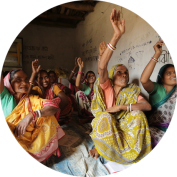
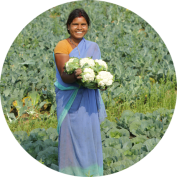
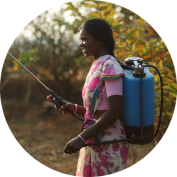
Joshi is the co-founder of Professional Assistance for Development Action (PRADAN) and now works as an independent consultant for the NGO, which works for rural poor, promoting self-help groups, developing locally suitable economic activities, mobilising finances and introducing systems to improve livelihoods of rural people.

Ramon Magsaysay Award: Citation for Deep Joshi

Born and brought up in a remote village of Pithoragarh (Uttarakhand), Joshi did B Tech from Motilal Nehru Engineering College, Allahabad. He went on to do his ME from the Massachusetts Institute of Technology and a Masters in Management from the Sloan School, MIT.

He has also worked with the Systems Research Institute, the Ford Foundation and has nearly 30 years of experience in the field of rural development and livelihood promotion. He also advises the government on poverty alleviation strategies.

In an interview with Chetan Upadhyaya for Sify.com, Deep Joshi expresses the hope that people and the government will understand the importance of rural development and poverty alleviation.

Magsaysay Awards, Asian version of Nobels, announced

What was your reaction when you learnt about the award? How do you see it?
The Magsaysay Award Committee intimates the awardees in advance and gets their nod. So, I received a call from them about 2-4 weeks back and I was very happy. I think this award is for the people who leave bright careers and join us at PRADAN. The educated and elite youth are also required in villages and it is not necessary that you only join the IT sector or become a civil servant.The biggest challenge is poverty. So this award is the recognition of the all the hard work of my colleagues at PRADAN- they will be encouraged to work more.

Secondly, it will also encourage more educated people to work in villages.

Deep Joshi How do you plan to use this award money?
This is not a very large sum -- only about $50,000 or Rs 24 lakh. But yes, it will be used for a noble cause. 

The inspiration
Please tell about your personal life.
I spent my initial 17 years in my village. We (we were seven brothers and sisters) used to take cattle to the fields and contributed to farming. Our family was not rich but had just enough food and clothes to meet our ends. All of my siblings are well educated.

What has been your biggest source of inspiration?
When I was studying in the US, I used to think of India and our people. So after returning to the country, I went to Maharashtra to see the work of an NGO.There in Jamkhed taluka of Ahmednagar district, I met a doctor couple named Mabel and Raj Arole, who had done MD in public health care from John Hopkins University, but were working with the rural people there. At the time of marriage, they had decided to work in villages. Seeing them work in a remote village was the turning point in my life. I still remember seeing them sitting on the floor, talking to the poor and illiterate women with affection and interest! That was the time when I started feeling that young and educated people should work for rural people.

Deep Joshi Tell us about the contribution of your family, especially your wife, in your success?
I think the role of my wife was tremendous. At the time of marriage, I had made up my mind to work in villages. That was 1982. When I told 'my would-be wife' about my plans, she said: 'OK, you do what your heart says'. After marriage, she took up a job and also handled household responsibilities. I was working for an NGO and with that little salary, it would not have been possible to lead a normal life. When I used to travel to villages, she would run the family and allowed me to do what I wanted to.

The children also supported me very much. When my son Udai and daughter Girija were kids, they never made big demands or complained about things we could not afford.


Focus on agriculture
There are companies that have huge funds for corporate social responsibility. After this award, do you think you will be in a better position to guide such companies in using the funds and also attract more resources for PRADAN?
Officially I retired from PRADAN more than two years ago, but I continue to help my people, whenever they face problems. Though this award gives fame to PRADAN, and the funds should come even without my asking the companies for the same. But whenever my people approach me, I am there.

What according to you are the main thrust areas for the development of India?
Sixty per cent of the people in India are dependent on agriculture. So we need development of agriculture and more than that development of man and water resources. Even now, our two-third of the land is dependent on rainwater and large-scale irrigation is not possible in several areas. So the first priority should be to regenerate our resources.

The condition of land, forest and the water has deteriorated during the last 60-70 years. The livelihood of the villagers is dependent on natural resources, so if we want to make a dent in the poverty in the coming 10 years, our immediate focus should be on the restoration of these resources.

Deep JoshiFight for rights
Do you agree with people who say that giving subsidies to people kills the prospect of brighter India because it makes the people lethargic and lazy?
No. Every person has self-respect and barring a few exceptional cases, no one wants to remain idle and depend on others for survival. And if you look carefully, there are people who do not have access to resources and for them, subsidy is big source of hope. If subsidy gives level-playing field for the poor, there is no harm in continuing with it.

Your NGO is working in seven states. What do you think is the common problem?
I think the 'common problem' is that the common man is not able to raise his voice to get his due. How they can be made to raise their voice in village panchyats or offices of Block development officer is a challenge.
There are so many government schemes and programmes. But complaining about corruption and seeing themselves as weak, villagers prefer to suffer in silence.

Gandhiji has shown us the path of Satyagrah. So, if people realize their power, break the silence and start fighting for their rights, India will develop a faster rate.

The solution lies in organizing the people and making self-help groups.

Deep JoshiMessage for youth
What is your message to the young people?
My earnest and sincere appeal to the young minds is the same: Work in a village for at least five years. It will improve not only the society but improve your quality of your life too.
I was good at maths and science. And automatically people think that you should become engineer. And it was only when I became an engineer, I thought that I am not made for joining a company.

I was the topper of my college. But in 1968, one of my classmates was earning Rs 750 a month in a company, while I used to get just half of that for my job as a lecturer. So this was my choice and not compulsion that I am in this field. I always had some kind of idealism and feeling that I have to do some noble work.
Even today, there are people who ask: 'What is NGO? This is work of the government.'

I don't accept this  outlook. This is everybody's work. This is the work of the society and its people. At best, the government can be a facilitator and ensure resources but participation of the public is most vital part of development process.

Normally, the average working life of a person is 40 years and if you want to give back to the society, spending 5 years in a rural area is not difficult. Later, you can settle in cities.

The village needs our intellectual and professional talent. The society has given us so much and it is our duty to do something for the massesæ —e owe it to our ancestors and our future generations.

Deep JoshiService for villagers
Do you think the government should make it mandatory for all IAS officers to get a part of training in rural areas and also get rural postings from time to time?
Whenever you make a rule, people search for loopholes. Or it may end up just becoming a formality. So the best thing is to create awareness about it.

A few years ago, I asked a senior IAS officer that shouldn't every would- be IAS officer (selected for training) be asked to work as Block Development Officer. He replied: 'Why BDO? He/She must be made to work as Panchayat Secretary and work for the welfare of the villagers. And then only he should be made IAS and represent India at Geneva'.

A policy maker like IAS must be able to say with confidence that, 'See, I have made 5 cooperatives with my own hard work and sweat'.
And 'they' should think themselves on these lines. If you talk of running the administration of India and giving direction to the development of India, have you ever done the development work with your own hands?

The same message I will give to politicians too. The people who become MPs or MLAs should ask themselves whether they have done any community work for the benefit of the people. I think after contributing to the villages only, we can make claims of doing something for the society. This is the big problem that if we have never done any community work, how can we rule the country?

Five years from now, where do you see yourself and PRADAN?
When PRADAN was conceptualized, we thought of working with 4-5 staff. Today we recruit 70-80 new people every year.Our style of functioning is very professional and systematic. At present, we reach out to about 1.75 lakh families. In 5 years from now, I hope that we will be able to increase our scope of work by 10 times and touch the lives of at least 15 lakh families by 2017.