

Aajeevika Dabri: A Step to Advance Water Security and Livelihood Resilience for Vulnerable Rural Households
-Preetam Gupta, Team Coordinator, PRADAN
For small and marginal farmers, access to water often determines not just agricultural productivity, but survival itself. Emerging from grassroots learnings and community-led watershed planning, Aajeevika Dabri represents an evolving model of water-secure and livelihood-resilient rural development in Chhattisgarh.
Water, Risk, and Livelihoods
Access to assured irrigation and diversified livelihood opportunities plays a critical role in enabling full-time farming, improving farmer incomes, and building sustainable rural livelihoods. In Chhattisgarh, over 40 lakh households depend primarily on agriculture and farm-based labour for their income. Nearly 80% of these farmers fall within the small and marginal categories, cultivating less than 2 hectares of land and relying heavily on rainfall for their agricultural practices.
In such a context, water security for on-farm activities becomes critical. It provides farmers with the flexibility to undertake timely agricultural interventions, supports crop diversification, enables second cropping, and sustains water-dependent livelihood activities beyond the monsoon season. Without reliable access to water, agriculture remains precarious and largely subsistence-oriented.
This challenge is further intensified by the growing impacts of climate change. While the state receives an average annual rainfall of 1,277 mm, nearly 80–85% of it is concentrated within the monsoon months (June - September). However, emerging trends indicate increasing variability in rainfall distribution. A declining number of rainy days, coupled with more intense rainfall events, has led to prolonged dry spells interspersed with floods and erratic precipitation patterns.
A stark example of this was witnessed in 2025, when districts like Dantewada and Bastar experienced over 200 mm of rainfall within just 2–3 days, severely disrupting connectivity, damaging standing crops, and affecting rural infrastructure. Conversely, the state also faces recurring dry spells each year, where the absence of rainfall for continuous periods of 2–3 weeks leaves agricultural fields parched. These erratic patterns amplify uncertainty in farming, making crop failure and low productivity an ever-present risk. For farmers and their families, this translates into not only economic vulnerability but also deeper challenges of survival and stability.
Within this landscape, MGNREGA emerges as a critical facilitating factor for water conservation and creation of livelihood infrastructure in rural areas. Farm ponds, included under both Natural Resource Management (NRM) and agri-allied categories, hold significant potential as decentralized irrigation assets that can strengthen both water security and livelihoods.
However, despite the significant potential of farm ponds as decentralized irrigation assets, challenges around long-term functionality, livelihood integration, and contextual planning continue to persist across many regions. With increasing climate variability and changing rainfall patterns, there is a growing need to strengthen scientific planning processes, appropriate site selection, and the integration of water structures with sustainable livelihood models. Factors such as catchment dynamics, soil characteristics, seepage management, and water retention capacities become critical in ensuring that these structures remain functional and effective over time. Equally important is the need to link irrigation assets with diversified farming and livelihood practices so that small and marginal farmers are able to derive sustained economic and ecological benefits from them.
How did the Idea of Aajeevika Dabri Come About?
Building on the urgent need for water security and resilient livelihoods, the Government of Chhattisgarh introduced the Aajeevika Dabri (Livelihood Farm Pond) initiative, a farm pond-based Integrated Farming System (IFS) aimed to empower small farmers by promoting sustainable, year-round income sources. It focuses on building small water bodies/farm ponds (Dabris) to aid in irrigation, fish farming, horticulture, and livestock rearing. Unlike earlier efforts that largely focused on water conservation alone, this initiative places equal emphasis on ensuring long-term water availability while promoting pond-based livelihoods.
The idea for Aajeevika Dabri did not emerge in isolation; it was shaped by on-ground learnings and evidence from field experiences. This shift strongly resonates with grassroots realities. PRADAN’s work in the state has long centred on women’s collectives, livelihoods, and climate action, with women, often the most underserved across social and economic groups, at the core of these efforts. In villages of the districts; Dhamtari, Kanker, Kondagaon, Bastar, and Raigarh, where PRADAN has been active, self-help groups (SHGs) and village organizations (VOs) have evolved into platforms for collective action and local problem-solving. Within these spaces, water scarcity consistently emerged as a pressing concern, alongside savings and credit. Women began actively engaging with challenges related to both irrigation and drinking water.
PRADAN facilitated visioning exercises with women’s groups, enabling them to imagine their ideal village, identify and prioritise critical development needs, and chart pathways to achieve them. Water insecurity emerged as a central concern, prompting collectives to take the issue forward as a shared agenda.
To support this, PRADAN strengthened their capacities by deepening their understanding of rainwater harvesting, enabling household and field-level micro-planning, and building awareness around provisions under MGNREGA. Alongside this, it provided sustained technical handholding through participatory planning processes such as social and resource mapping, adoption of the ridge-to-valley approach, and scientific site selection.
Support also extended to the construction of water harvesting structures across different slopes, along with training on measurement techniques for local functionaries, including resource persons, mates, and Gram Rozgar Sahayaks (GRS), thereby strengthening last-mile delivery.
The process also surfaced a set of powerful learnings. One of the most significant was the realisation that communities possess deep contextual knowledge and an inherent capacity to transform their villages when guided by a shared purpose. The NRM planning process reinforced that no one understands a village better than its own people.
Community members demonstrated nuanced knowledge across multiple dimensions, such as patterns of rainwater flow across different land types, historical experiences of droughts and floods, variations in soil depth, and the social suitability of different interventions. They also brought valuable insights on local forest ecosystems, plant species resilient to adverse conditions, and critical gaps in institutional delivery and schemes at the Gram Panchayat level. Integrating these perspectives proved essential in designing interventions that were both effective and locally relevant.
Several other important learnings emerged through this process. These included the effectiveness of collective-led planning with women at the forefront and ensuring inclusion of all sections of the population; the value of saturation-based Integrated Natural Resource Management (INRM) planning; and the importance of tools such as water budgeting and labour budgeting. Together, these approaches helped ensure that planning extended beyond individual households to the larger landscape, enabling interventions that responded not only to community needs but also to the ecological requirements of the entire landmass. The need to treat common lands, including forests, drainage lines, fallow and wastelands as integral to planning also became evident, alongside the potential to embed livelihood activities within water harvesting structures. Equally critical was understanding how to inform and work with public systems to enable lasting change.
These learnings were further consolidated during the implementation of the High Impact Mega Watershed Project (HIMWP), launched in 2018 with support from the Bharat Rural Livelihood Foundation, Axis Bank Foundation, and the Ford Foundation. As the lead civil society organisation, PRADAN directly implemented the project in Narharpur and Bhanupratappur blocks of Kanker district in Chhattisgarh, while also anchoring the State Programme Management Unit (SPMU). In this role, it supported 12 partner organisations and worked closely with the state NREGA cell and Zila Panchayats, strengthening convergence and institutional collaboration at scale.
The results have been transformative, improved water availability during dry seasons, increased groundwater levels (with dug wells and handpumps functioning year-round), and diversified livelihoods through vegetable cultivation, fisheries, and horticulture. Migration has reduced significantly as local livelihood opportunities have expanded. Notably, Masulpani Gram Panchayat was recognised as the second-best Gram Panchayat in the 5th National Water Awards for its work in water conservation. Later, Dumarpani Gram Panchayat of Kanker district secured third position in the 6th National Water Award.
More importantly, when these assets were integrated with livelihood activities, their impact multiplied. PRADAN’s pond-based IFS model emerged as a key innovation; combining fishery, duck rearing, plantation, and Rabi cultivation within and around farm ponds. This approach optimised resource use while diversifying income streams.
Earlier, most households cultivated only a single crop of paddy during Kharif on the same piece of land, producing around 10 - 12 quintals per acre. This translated into a gross income of approximately ₹31,000 - ₹37,000 (at MSP and bonus rates), with a net annual income of just ₹21,000–₹27,000 after accounting for input, labour, and machinery costs. The land remained largely underutilised for the rest of the year.
With the introduction of the IFS model, the same land began to generate multiple outputs across seasons, enabling households to earn upwards of ₹1 lakh annually, clearly demonstrating how water security, when combined with integrated livelihood planning, can significantly enhance productivity and fundamentally reshape rural economies.
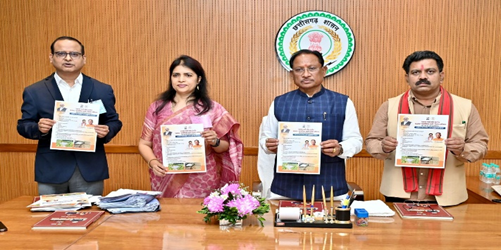
During a HIMWP review meeting held on 25th November 2025, success stories and learnings from farmers were shared with the MGNREGA Commissioner, Shri Taran Prakash Sinha (IAS). The discussions highlighted the need for a programmatic approach to farm pond construction, one that integrates water conservation with structured livelihood packages. Aajeevika Dabri emerged as a direct outcome of this dialogue and was subsequently launched as a flagship campaign by the Hon’ble Chief Minister of Chhattisgarh, Shri Vishnu Deo Sai, and the Hon’ble Deputy Chief Minister, Shri Vijay Sharma.
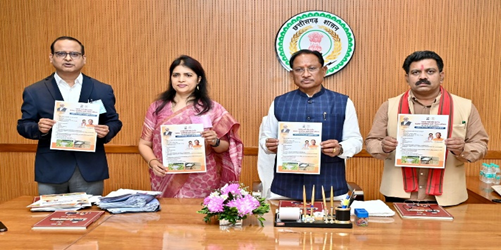
Photo: The official launch of the flagship program by the Government of Chhattisgarh
Aajeevika Dabri: A Shift
The initiative is nested within the Mor Gaon Mor Pani Mahabhiyan (My Village, My Water Campaign), launched on National Panchayati Raj Day (24th April 2025) to strengthen rainwater conservation efforts across rural areas. Dabris are not new to the state and have been widely constructed under MGNREGA, Aajeevika Dabri marks a critical shift, from infrastructure creation to livelihood-oriented water resource development.
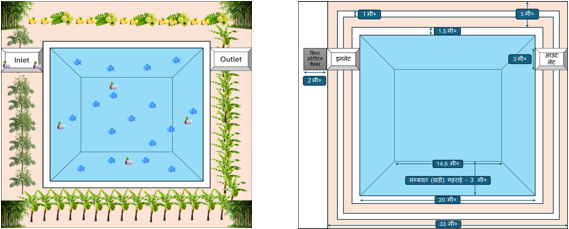
Photo: An Integrated Farming System (IFS) model
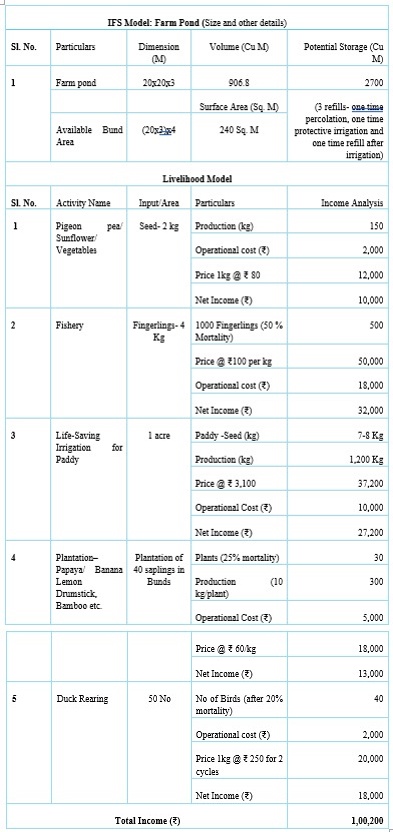
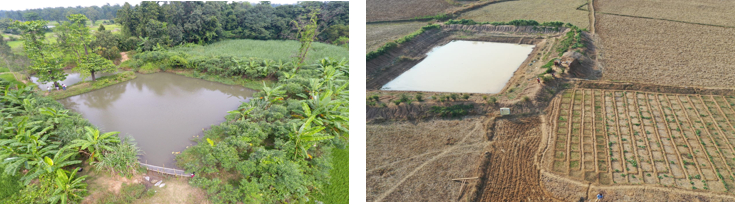
Photo: An IFS ecosystem in Surajpur and Bastar district, Chhattisgarh (left to right) planned in HIMWP phase 1 and developed under MGNREGS
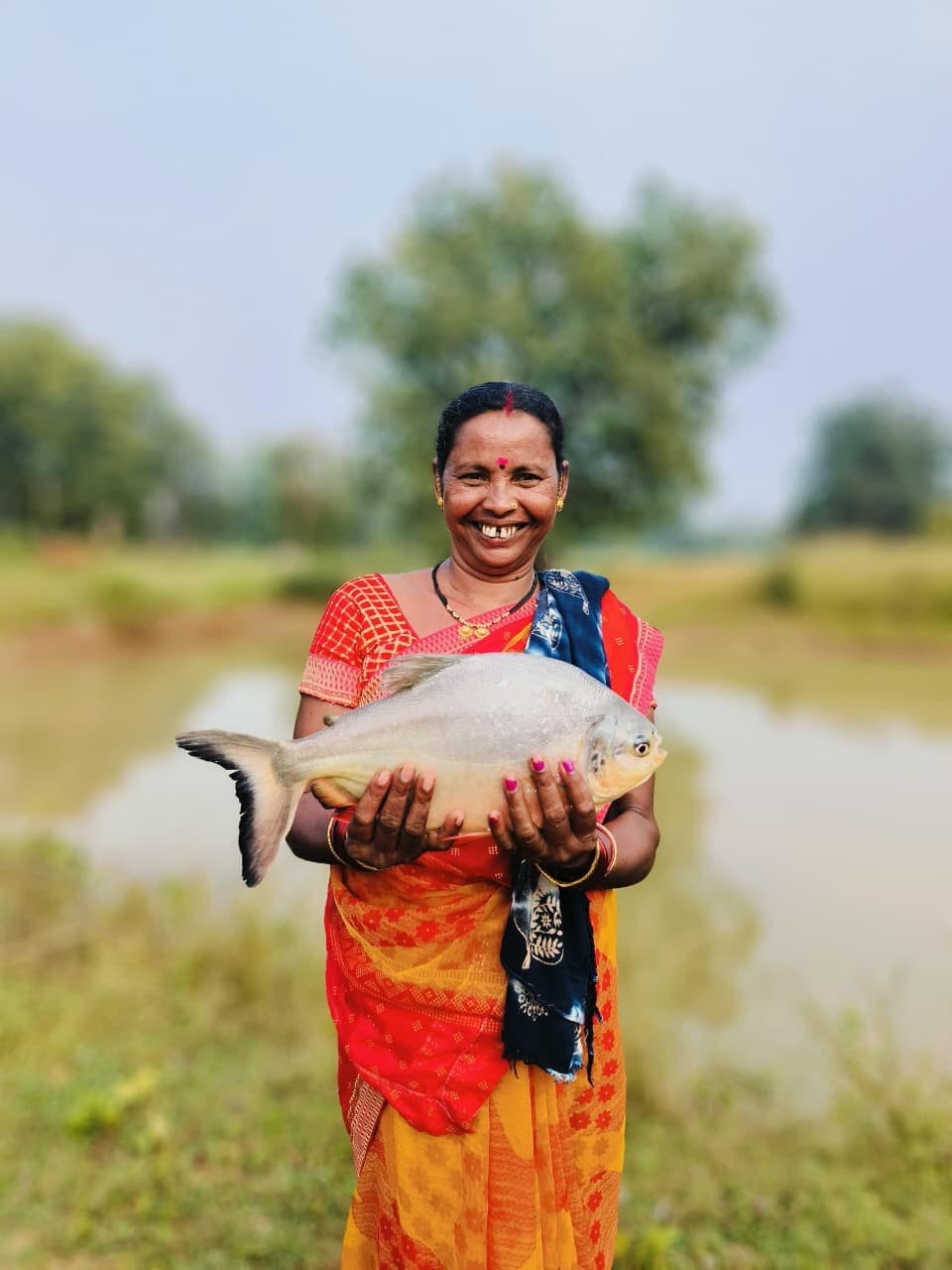
Photo: Sudama Taram (Farm Pond Fishery Farmer), Marrampani, Narharpur, Kanker (C.G.)
Design, Targeting, and Key Benefits of Aajeevika Dabri
The eligible households for Aajeevika Dabri are drawn from vulnerable sections, in line with the provisions under MGNREGA guidelines. To ensure durable asset creation and long-term water availability, technologies such as Geographic Information System (GIS), Composite Landscape Assessment and Restoration Tool (CLART), and Yuktdhara (a planning platform based on Bhuvan, ISRO’s Indian geo-platform) have been integrated into the INRM planning process. These tools enable the identification of suitable sites with high water retention potential.
While farm pond interventions have been undertaken in the region for several years, integrating scientific planning tools with community-led INRM processes has helped strengthen both the quality and long-term effectiveness of these assets. Earlier, many interventions were often implemented as standalone structures primarily focused on water storage. The current approach has enabled a more landscape-oriented understanding of water flow, catchment behaviour, and livelihood integration, helping improve site suitability, water retention, and overall functionality. As a result, several structures are now demonstrating stronger outcomes in terms of irrigation access, cropping intensity, and sustained livelihood generation for small and marginal farming households.
Critical design provisions, including silt arrest chambers, inlets, outlets, and scientifically planned bunds and berms, have been incorporated to enhance the durability and functionality of the structures. These ensure that sediment carried by rainwater is filtered before entering the pond, adequate inflow is maintained, and excess water is safely discharged.
Field learnings from pond-based livelihood models demonstrated under HIMWP in districts such as Kanker, Kawardha (partnership area), and Bastar played a crucial role in shaping the Aajeevika Dabri initiative. These experiences highlighted key insights like identifying suitable land for pond construction with a focus on livelihoods, developing effective livelihood prototypes, leveraging MGNREGA funds to maximise incomes for vulnerable households, and adopting saturation approaches to build water-secure villages.
Building on these learnings, the government set a target of constructing 10,000 Aajeevika Dabri by May 2026. As of 31st March 2026, 1,516 ponds have been completed, while 8,202 are under construction.
- Key benefits of Aajeevika Dabri include:
- In-situ water conservation
- Protective irrigation for paddy during monsoon dry spells
- Irrigation support for second (Rabi) crop
- Additional income through fisheries and duck rearing
- Enhanced income from bund plantation (banana, moringa, papaya, pigeon pea, etc.)
Context, Challenges, and Emerging Pathways
Aajeevika Dabri has the potential to provide farmers with a critical safety net, enabling them to protect crops even under extreme weather conditions.
Geographically, Chhattisgarh can be divided into three regions—Northern Hills, Central Plains, and the Bastar Plateau (southern part). The Northern Hills and Bastar Plateau are characterised by undulating and mountainous terrain, dense forests, and a predominantly tribal population living in dispersed habitations. Compared to the Central Plains, these regions remain relatively remote and underdeveloped, with some of the lowest multidimensional poverty indicators in the state. Given the steep slopes and rugged topography, conventional irrigation systems such as canals and borewells are often neither feasible nor cost-effective. In such contexts, decentralised solutions like Aajeevika Dabri offer a viable alternative by enabling rainwater storage over longer durations and strengthening water and livelihood security for vulnerable households.
Post-monsoon water scarcity is a persistent challenge across villages. While better-off households are able to secure access to water, underserved communities often struggle to meet even basic needs for drinking and domestic use. Addressing this requires long-term vision, collaboration, and sustained efforts.
Encouragingly, there are examples within Chhattisgarh that demonstrate what is possible. Gram Panchayats such as Masulpani (Narharpur Block, Kanker) and Chanagaon (Nagari Block, Dhamtari) have made significant strides in rainwater harvesting over the past decade. Adopting a ridge-to-valley approach under MGNREGA, these villages have developed hundreds of individual farm ponds alongside community water harvesting structures.
Women’s collectives have played a central role in this transformation, leading planning processes, monitoring progress, and preparing saturation-based annual plans. PRADAN facilitated these efforts through capacity building and technical support, while PRI institutions at the block and district levels ensured sustained institutional backing.
These experiences have not only demonstrated what works but have also informed a larger shift in approach. What began as localized pilots has now evolved into a programmatic direction, with the government building on these learnings to scale integrated water conservation and livelihood models across the state. The transition from isolated successes to a structured, statewide initiative reflects a growing recognition that sustainable change lies in combining water security with livelihood planning.
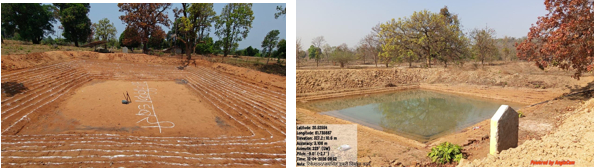
Photo: Newly constructed Aajeevika Dabri Ponds in Bastar and Dhamtari Districts (left to right)
Way Forward: Convergence, Scaling, and a Water-Secure Future
While the Aajeevika Dabri campaign is underway and pond construction is progressing, the next phase will require sustained focus on livelihood layering. The role of SHGs, Gram Panchayats, and line departments will be critical in ensuring effective convergence of schemes. In this direction, joint directives have been issued by NREGA, NRLM, the Department of Panchayati Raj, Government of Chhattisgarh and the Directorate of Horticulture and Farm Forestry, Government of Chhattisgarh to guide implementation at the district level. Clear targets for FY 2026–27, along with dedicated labour budget allocations, will be essential to maintain momentum.
The recently passed Viksit Bharat Guarantee for Rojgar and Ajeevika Mission Gramin (VB-GRAM-G) is expected to be rolled out in FY 2026–27, presenting a significant opportunity to embed water security within broader rural development planning. Village-level plans developed under initiatives such as Mor Gaon Mor Pani Mahabhiyan and the High Impact Mega Watershed Project must be effectively integrated into the Viksit Gram Panchayat Yojana to ensure comprehensive and sustained outcomes.
Strengthening water security is not just an environmental priority, it is foundational to building resilient livelihoods and enabling truly self-reliant villages. Without it, the larger vision of Viksit Bharat 2047 will remain incomplete.
About the Author

As a Field Guide and Team Coordinator, he contributed in grooming of young professionals and practitioners, fostering collaborative and impactful grassroots interventions. Currently, he is associated with the High Impact Mega Watershed Project under State Project Management Unit (SPMU), Chhattisgarh, where he works closely with partner civil society organizations to strengthen watershed development and sustainable livelihood initiatives.