

From Practice to Thought Leadership: How Everyday Leadership Moments Shape What Organisations Learn or Miss
What does it really mean for an organisation to be a thought leader? Beyond strategy and articulation, this piece looks at the small, often unnoticed moments where learning either opens up or shuts down, revealing how leadership is less about authority and more about how groups think, question, and make meaning together.
Background
A quick search online about thought leadership offers a simple idea: a thought leader is a person or an organisation that becomes a trusted voice in its field by sharing ideas that help others see problems differently. PRADAN is often described as a thought leader in rural development. But what does that really mean in practice? How do we recognise a true thought-leading organisation? Are there everyday behaviours that distinguish one organisation from another? And do those behaviours show up only in how we engage with the outside world, or also in how we work with each other internally? These questions have stayed with me for some time.
When does thought leadership actually become visible? Is it only in speeches, strategy documents, or the words of leadership? Or does it appear in smaller daily moments in how questions are welcomed, how disagreements are handled, and how uncertainty is treated?
Many organisations speak about learning, innovation, and empowerment. They encourage people to think critically, adapt, and take initiative. Yet the real test of these values is not what organisations say, but how they respond when work becomes messy, when outcomes are unclear, assumptions are challenged, or power is unevenly distributed.
This article reflects on those everyday leadership moments where learning either opens up or quietly shuts down. Rather than focusing on individual personalities, it looks at the patterns of behaviour organisations encourage or discourage.
At its core, it asks a simple but difficult question:
Are organisations truly practising thought leadership, or only speaking about it?
How We Learn Shapes How We Lead
W hile thinking more deeply about the idea of thought leadership, I came across Dorie Clark, a contemporary leadership thinker, marketing strategist, and faculty member at Columbia Business School in the United States. Through her work on professional reinvention and long-term thinking, she reflects on how individuals engage with their work and evolve within organisations. I found her ideas particularly resonant when I looked back at my own journey and experiences.
Clark suggests that people tend to approach their work in four broad orientations. These are not ranks or positions, but different ways in which people relate to their responsibilities and the situations they encounter.
- The Career Professional, or Doer, focuses on getting things done well, demonstrating competence, and being seen as reliable.
- The Curator pays attention to patterns. This orientation is less about immediate action and more about making sense of what is happening across situations and over time.
- The Expert brings deep knowledge and authority in a particular domain. Expertise often shapes how decisions are made and how problems are understood.
- The Thought Leader goes a step further. This orientation is not just about knowledge or performance, but about shaping how others think, helping groups see problems differently and ask better questions.
In most organisations, all these orientations exist and in fact must exist. The important question is not who occupies which role, but which of these orientations the organisation’s culture and systems make safe, valued, or risky.
When Getting Things Done Becomes the Only Safe Way
I n many meetings I have joined at PRADAN, the main focus is on results. People prepare carefully. Slides look polished. Numbers are explained with confidence. When unexpected feedback from colleagues or communities surfaces, the immediate instinct is often to explain why the original plan still makes sense. I have noticed myself doing the same at times.
This reflects what Dorie Clark describes as the Career Professional or Doer orientation, where being credible means being capable, reliable, and correct. There is nothing inherently wrong with this. In development work, rigour matters. Funding partners, communities, and colleagues depend on us to deliver.
The difficulty begins when this becomes the only acceptable way of engaging.
In many organisations, performance gradually becomes the safest way to participate. Meetings focus on targets, timelines, indicators, and outputs. Plans are articulated clearly, and deviations are quickly explained.
Organisations need consistency and reliability. The challenge arises when performance becomes the dominant and safest orientation, leaving little room for curiosity.
When results fall short or patterns shift, the instinct is often to justify rather than inquire. Conversations move quickly toward explanation and closure. Rarely is there a space to ask what the situation itself might be teaching us.
When this pattern repeats, learning quietly gives way to defence. People become skilled at protecting credibility rather than exploring uncertainty.
This is the Doer orientation at its strongest - efficient, competent, and cautious. Many people operate here because they have to. But when organisations reward only this orientation, asking questions begins to feel risky, and thinking differently can feel like weakness rather than contribution.
Making Sense Before Making Decisions
A t times in organisational life, progress slows not because people lack ability or effort, but because situations change faster than we can make sense of them. Work continues, results are produced, yet something begins to feel repetitive or slightly misaligned. It is often in these moments that a different kind of leadership becomes possible.
I remember a team review where most of the discussion was moving in a familiar pattern: numbers, targets, and completed activities. Then someone asked, almost quietly, “We are seeing the same issue in three villages. What might be common across them?”
That single question changed the tone of the conversation. People began linking experiences of land access, women’s mobility, informal power structures, the timing of interventions, and the role of community groups. No immediate solution emerged that day
But something more important happened: the team began thinking together.
Instead of rushing toward quick fixes, attention shifted to understanding what was unfolding. Patterns across locations and experiences became visible. Questions replaced quick answers.
This is what the Curator orientation looks like in practice: the effort to make meaning from experience before moving to action.
Curators can be found in many roles within organisations. They resist the temptation to simplify complex realities into neat explanations. They notice when information does not align and choose not to resolve those tensions too quickly. They remain attentive to what is unsaid, overlooked, or taken for granted.
Their contribution may appear slow in organisations that value speed and certainty. It does not always produce immediate decisions or visible outcomes. Yet over time it allows organisations to understand themselves more clearly.
Without this orientation, organisations risk confusing activity with learning. Familiar patterns repeat under new labels, and change efforts cycle without deeper insight. With it, organisations begin to learn not only from action, but also from reflection.
When Knowledge Listens - and When It Defends
A s organisations mature, certain kinds of people who have technical depth, long field experience, proven track record, etc. gradually gain authority. Years of experience, technical understanding, and proven approaches begin to shape how problems are framed and how decisions are made. This expertise often brings stability and confidence. But when reality behaves differently from what we expect, expertise faces an important choice.
In one region, we repeatedly saw high drop off rates with an improved finger millet variety despite excellent germination and initial enthusiasm from farmers. Our most experienced agronomist, someone with 18 years of success in promoting better varieties, first concluded that farmers were not following the recommended package properly. The response was to intensify training and create stricter monitoring checklists.
After two more seasons with similar results, a young team member shared detailed observations from women farmers: the new variety matured 18–22 days later than local types, clashing with the peak labour demand for transplanting paddy - a conflict not visible in our original trials.
Instead of defending the existing protocol, the senior agronomist visited households with her, listened and then proposed a revised cropping window and a small intercrop adjustment that aligned better with local calendars. Adoption and continuation improved markedly in the next cycle.
What changed was not the technical knowledge itself, but the way expertise responded to new information. Instead of defending the existing approach, it became curious about what the field was revealing.
When expertise remains open, it becomes a living resource that grows with experience. When it closes too quickly, it risks becoming rigid not because it was wrong initially, but because it stopped listening.
Power and How Fast We Judge
O rganisational learning is shaped not only by processes and systems, but also by how power operates in everyday interactions. Often, authority expresses itself through speed, quick decisions, confident judgments, and immediate corrections meant to uphold organisational values or norms.
I remember one review meeting clearly. The team had gathered after a long day in the field. At the same venue, community members from one district had arrived for an exposure visit to another district. Women from self-help groups, along with a few of their male family members, had reached early that morning. Around 9:30 a.m., most of the women were still having breakfast inside the hall, while some of the men were standing outside in the sun.
A colleague from the same district happened to walk past, and the men approached him. They began chatting casually about crops, rainfall, and the season ahead.
In our work, there is a strong expectation that development practitioners should prioritise engaging with women, especially when working with women’s groups. This norm is often emphasised to ensure that women’s voices remain central.
The formal review meeting began sharply at 10:00 a.m. During the meeting, while that colleague was presenting his update, a senior colleague interrupted him publicly. The person questioned how a development professional could be so insensitive as to spend time speaking with men instead of women earlier that morning.
The room fell silent. I knew the context: the women had been occupied with breakfast, and the men had simply approached first. But no one asked what had actually happened. The meeting continued. What stayed with the room was not just the correction itself, but the message it carried. When authority moves quickly to judgment, context often disappears
Over time, such moments shape behaviour. People learn which questions are safe and which are not. They begin to simplify complex realities before bringing them into discussion. The organisation may appear efficient, but the space for collective learning quietly shrinks.
A thought-leadership orientation does not eliminate authority. But it changes how authority responds. Instead of moving immediately to judgment, it pauses long enough to ask: What is actually happening here?
In complex environments, that pause can make the difference between control and learning.
What Happens When Concerns Meet Silence
After the incident, I spoke with my supervisor and shared my concern that the engagement approach had been inappropriate. I was advised not to intervene further, as it might affect how I was personally perceived by the senior colleague involved.
On another occasion, I wrote an email to the same supervisor, just to share how exhausted I was, not because of any physical weakness or lack of motivation, just from over-work. I had no expectation of any immediate remedial action; but just an empathetic ear. The message remained unanswered, both over email and in subsequent in-person meetings.
What baffled me more in this instance was not the workload itself, but what the response communicated. Silence became a signal.
From a thought-leadership perspective, such moments are not merely personal experiences. They are organisational data. They point to how systems respond when people raise concerns about sustainability, quality, or skewed workloads. In many organisations, people take on increasing responsibilities as expectations grow. This is often seen as dedication or resilience. Over time, however, stress surfaces through questions about capacity, continuity, or quality of work. What matters is not only the concern raised, but how the organisation responds. In some contexts, issues are acknowledged but left unresolved. In others, they are reframed as individual limitations or temporary problems.
When raising concerns feels ineffective or risky, behaviour adapts. People focus on managing their own load rather than questioning the system. Questions about structure, resourcing, or priorities gradually disappear. Organisations that are able to read these signals do not stop at asking why individuals are struggling. They recognise that repeated strain often reflects how work is designed and supported. They ask what the system itself is demanding and at what cost.
When Organisations Learn Together – “Thought Leadership Is a Collective Practice”
T hought leadership is often seen as one person's smartness or know-how. In reality, it’s quieter and spread out. It's a group's skill to stick with good questions. Thought leadership shows not in big words, but in daily signs. Like, if wondering is real work, not a side job; if long-held assumptions can be examined without fear of damaging ties or image; if reflection is allowed to accompany action, instead of being overtaken by day-to-day exigencies.
In one meeting I was a part of, we struggled to reach a closure. The participants argued on priorities. Voices rose. Sides hardened. The facilitator refused to offer a top-down fix. Someone asked: "What do you fear losing if your side isn't picked?" The room eased. People shared worries regarding funds, suitability of interventions, communities’ preferences, and so on. There was no attempt to force-fit a solution. But agreement emerged slowly. This is thought leadership in action; not control, but shifting group-thinking.
Thought leadership is not about having all the answers. It is about keeping space open for better questions. It is about choosing curiosity over defensiveness, listening over asserting, reflection over rush. But this does not emerge in isolation. It draws deeply from other ways of engaging with work.
The Doer’s focus on execution ensures that ideas do not remain abstract, but translate into action and tangible outcomes. The Curator’s ability to notice patterns and make meaning across experiences allows thought leadership to stay grounded in reality rather than abstraction. The Expert’s depth of knowledge ensures that new questions and perspectives are not untethered, but informed and credible. Without these, thought leadership risks becoming either superficial, vague, or unanchored.
In that sense, thought leadership is not a replacement, but a synthesis. It depends on doing, on sense-making, and on expertise, even as it pushes groups to see beyond them. A balanced approach allows these orientations to coexist, each strengthening the other rather than competing for space.
In our work, where lives are layered and complex, pausing to invite diverse perspectives is not an extra step. It is the difference between repeating familiar patterns and arriving at genuine learning.
It also shows how discomfort is handled. In some spaces, uneasiness is quickly smoothed over to maintain control or harmony. In others, it is acknowledged as part of the process, an inevitable companion to growth. The latter recognises that meaningful learning often unfolds in moments that feel uncertain or unresolved.
- When only doing is rewarded, people guard self.
- When sense-making is ignored, learning thins.
- When know-how is protected, change slows.
- When insight ties to rank, understanding shrinks.
What Might We Ask Ourselves?
Instead of who leads thoughts, groups could ask:
- Do our behaviours make asking as safe as delivering?
- Can ideas be checked without fear of blame or heartburns?
- Is there room to reflect and find meaning in what happens?
- Do values that we espouse outside values show up in engagements in inside as well?
These aren't easy. They need an honest group look. But without, it's easy to stay busy but learn little.
Learning as a Leadership Choice
Thought leadership isn't a job, a title, or a talk plan. It's a daily group habit, seen in small builds; how talks go, feedback is taken, and unknowns are held. When groups make space beyond doing and guarding, to build a shared sense, they boost more than merely quantifiable results. They light the way. In a complex, changing world, that is the capability, groups hoping to be thought-leaders must build.
About the Author
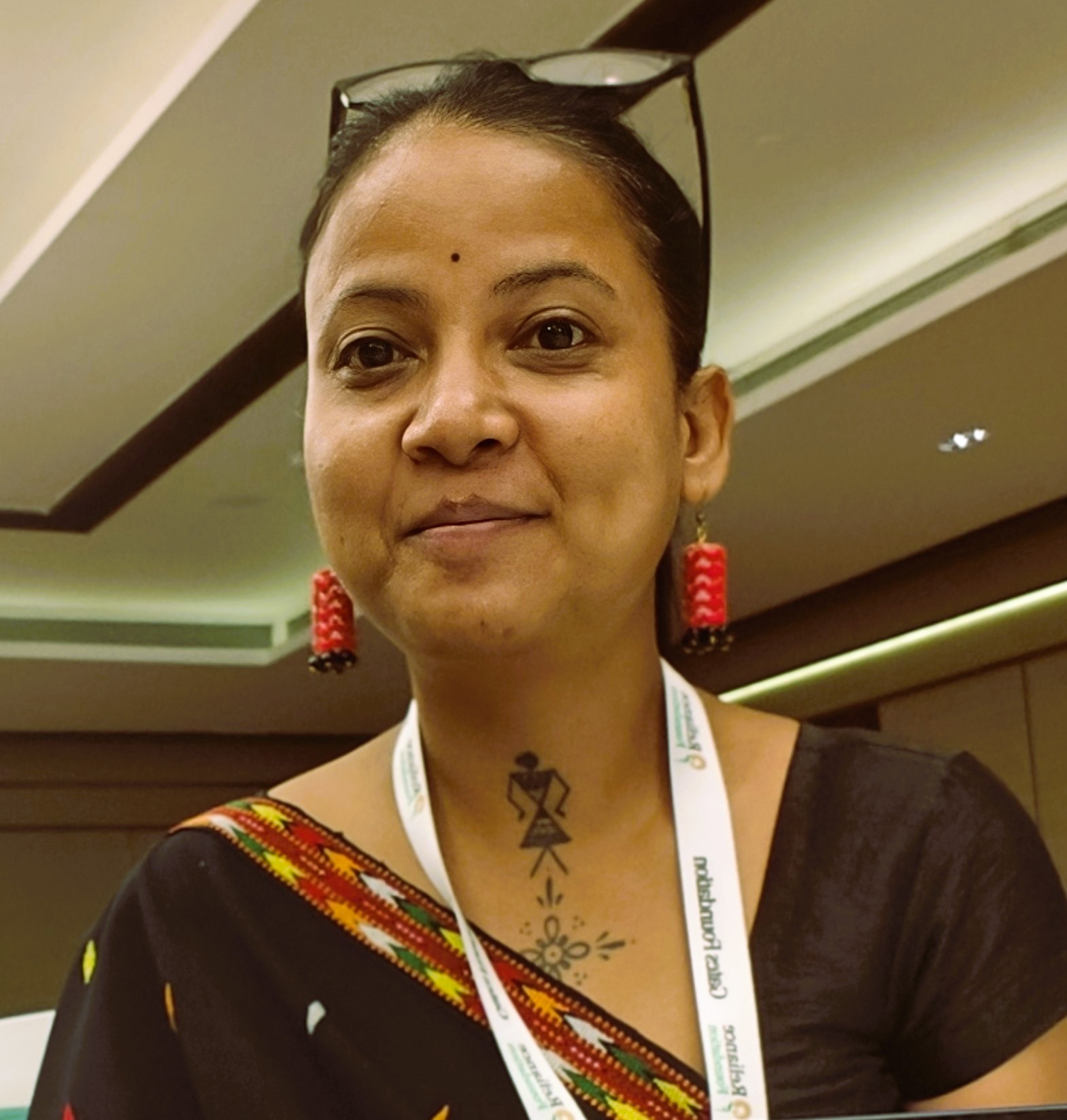
Illora Rabha holds a B.Tech in Mechanical Engineering from Biju Patnaik University of Technology. She is currently associated with PRADAN and brings extensive grassroots experience in the development sector. Her work focuses on strengthening women’s collectives, promoting sustainable livelihoods, and advancing gender-responsive development. She has been closely engaged in building and nurturing community institutions such as SHGs, clusters, and federations, and in enabling women’s economic empowerment through both farm and off-farm interventions. Her areas of interest include women-led collectivisation, systems strengthening, and inclusive, people-centred development.