
When Success Failed Me
-Barni Chatterjee, Development Practitioner
What does it really mean to call a livelihood intervention a success? For Barni Chatterjee, years of working to bring women into fisheries seemed to offer a clear answer: participation, ownership, leadership, and the breaking of deeply rooted gender norms. Until one conversation made her look at that success differently. This is a reflection on what she missed, what she learnt, and why creating opportunities for women must go hand in hand with ensuring their safety, dignity, and agency.
The year 2020 marked a decisive turning point in my professional life. I stepped into a role I had no prior experience in, uncertain, but drawn by the possibility of learning something entirely new.
Until then, my work with PRADAN including a year of Development Apprenticeship and subsequent years (~a decade) in the field in West Bengal had been rooted in agriculture, women’s collectives, and questions of gender. These domains had, over time, shaped how I understood livelihoods and how I anchored new initiatives with women. But in 2020, I was asked to take on the Usharmukti project in West Bengal, an assignment that felt far removed from everything I knew.
The Usharmukti project was being implemented across all teams in the state of West Bengal, and within my team, I found myself in the position of anchoring it. Despite my limited experience, there was a confidence, both within me and among my colleagues, that I could grow into the role. There was also a subtle but significant shift unfolding within the team. A senior colleague made a conscious effort to create space for women to engage directly with stakeholders at the Panchayat, Block, and District levels, spaces that had traditionally been navigated by men. His intent was clear: to see women not just participate, but lead.
Usharmukti, literally, “liberation from barrenness” is a large-scale watershed development programme spanning 54 blocks across six districts of West Bengal. It emerged from a growing recognition that earlier water conservation efforts, though well-intentioned, often remained fragmented, implemented in isolated pockets rather than across continuous landscapes. Usharmukti sought to address this by reimagining watershed development at scale, guided by the principle of ridge-to-valley treatment. It paid careful attention to hydrological flows, catchment integrity, and the ecological logic of entire river systems.
Under this approach, vast and contiguous geographies were treated as interconnected systems, with the aim of managing rainwater more effectively over time and enhancing agricultural productivity in a sustainable way. It carried with it not just the promise of ecological renewal, but also the weight of ambition, of transforming fragile landscapes into ones marked by resilience and possibility.
With little grounding in watershed management, I accepted the assignment with a mix of hesitation and resolve. It felt like stepping into something I could not yet fully comprehend. But I chose to meet the unfamiliar head-on; to learn, to unlearn, and, slowly, to begin understanding what the landscape itself was trying to teach me.
Implementation of the Project
As the project unfolded, the landscape began to shift in visible, tangible ways. Across villages, small and medium water harvesting structures such as ponds, seepage tanks, and hapas started to emerge. Modest in form, these interventions were designed to support irrigation and recharge depleted aquifers, particularly for small and marginal farmers.
Yet, infrastructure alone does not create livelihoods. Gradually, conversations began to move beyond construction to questions of use, what more could these structures become? These reflections travelled across watershed committees, self-help groups (SHGs), and village organisations (VOs), taking shape in meetings, training sessions, and quiet, informal discussions under the shade of trees.
It was within these shared spaces that a new possibility surfaced. While the structures had been envisioned primarily for agriculture, we began to recognise their potential for something more, ‘fisheries’. A pond, after all, is not merely a repository of water; it can also hold the promise of food, income, and dignity. The idea carried with it the potential to diversify livelihoods while also strengthening household nutrition, especially for families with limited access to land.
When PRADAN invited volunteers to pilot fisheries in the region, I stepped forward without hesitation. There was a certain restlessness driving me, the urge to engage with the unfamiliar, to move beyond what I already knew. And so, once again, I found myself stepping into an uncharted terrain, guided less by certainty and more by curiosity.
My Tryst with Fisheries
Years of working in agriculture had already acquainted me with the layered nature of gender inequality. Even as we tried to position agriculture as a woman’s domain despite the fact that women performed nearly 70–80% of the labour, one invisible line remained uncrossed. In the villages I worked in, women were still not permitted to touch the plough. That single act, symbolic and prohibitive, reminded me how deeply power and patriarchy is embedded in everyday tools.
Perhaps it was this memory that shaped my resolve when I turned to fisheries. I wanted this livelihood to belong entirely to women, not as helpers or invisible labour, but as primary actors. With this intent, I began my journey with women in fisheries from Lalgarh Gram Panchayat, Jhargram block in West Bengal.
The terrain, however, was not just physical, it was social. As I moved from village to village, trying to understand the possibilities on the ground, I was met with hesitation and self-doubt. Many women lacked confidence; families offered little encouragement; communities were sceptical. The resistance was not always subtle. Men would often mock our meetings, laughing at the very idea of women becoming ‘fishermen’, as though the word itself carried a gender that could not be rewritten.
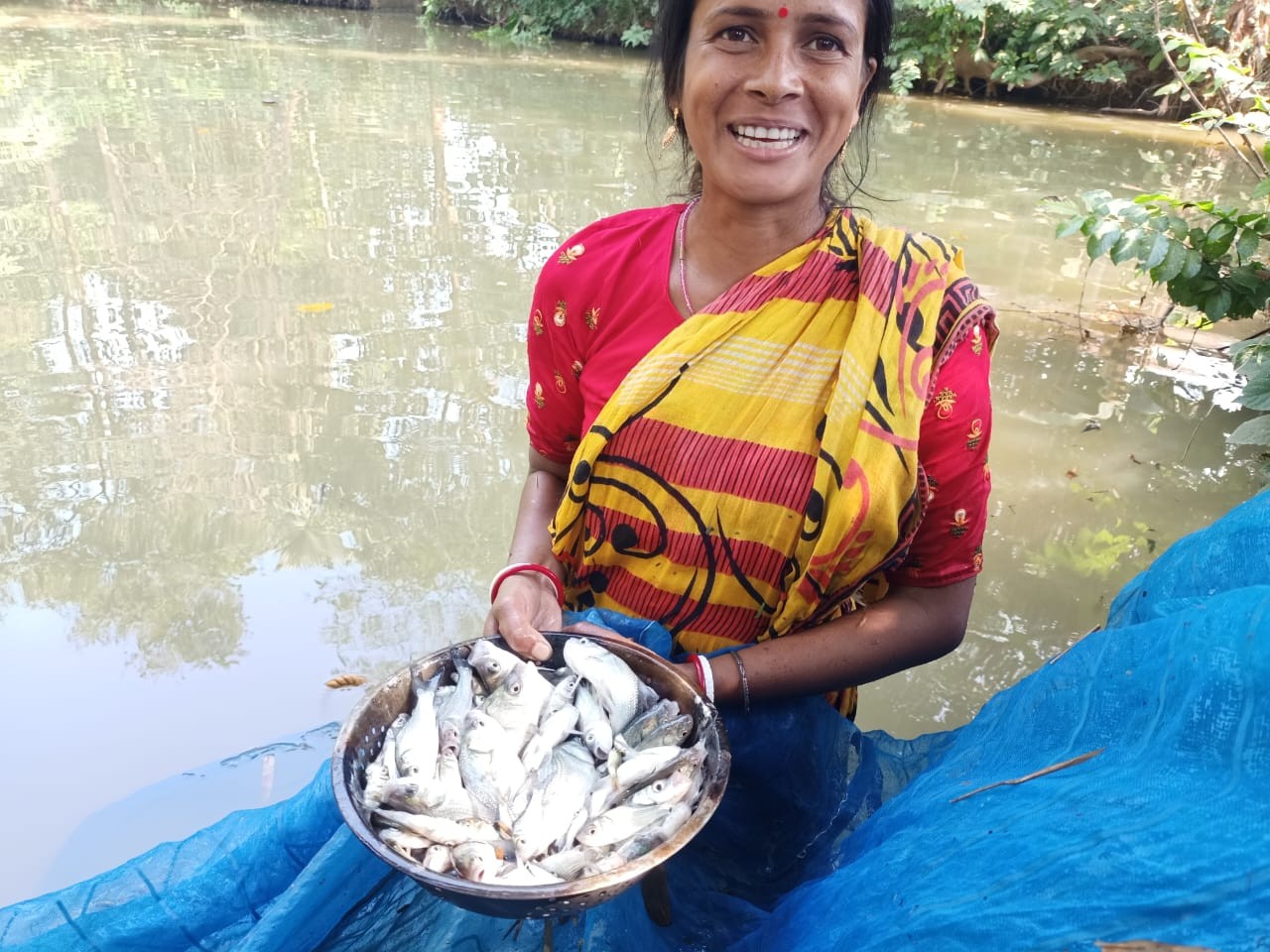
Photo: Women farmers engaged in fisheries activities
Among the many tasks in fisheries, one was held up as the ultimate proof of women’s supposed inadequacy—jaal tana, the act of dragging a heavy net through a pond. Laden with water and writhing fish, the net demands strength, stamina, and balance. The ponds were often over six feet deep, and it was widely believed that women being shorter in stature, burdened by custom could never walk the muddy depths or pull the weight to the shore. It was here, in this narrow corridor of disbelief, that the real struggle began.
These doubts followed me into the night, unsettling my sleep and forcing me to question my own conviction. Was it naive to imagine fisheries as an all-women livelihood? Yet each time uncertainty crept in, it was met with a stubborn resolve. I knew this path was not only possible, but also sustainable.
After all, women had always carried the heaviest burdens, bent over in flooded fields transplanting paddy, harvesting crops under unforgiving suns, hauling firewood and baskets of earth balanced on their heads. Strength had never been absent; it had merely gone unacknowledged.
And so I began tentatively but with intent to reimagine fisheries with women. My predecessors had worked with fishing communities before, almost exclusively with men. Under the Usharmukti project, I chose to walk a different path: to invite women to the centre of a livelihood from which they had long been written out.
Starting with a village- expanding further
The journey began in Baghghora, a small village in Jhargram. From there, it slowly expanded, first across the watershed, then across the entire block until women were involved in every stage of the process, from preparing ponds to selling fish in the market.
The women were curious, even excited, about trying something unfamiliar. But curiosity often walked hand in hand with ridicule. In the villages, the idea of women entering ponds, dragging heavy nets, or handling fish in public spaces unsettled deeply internalised notions of what women could or should do. Men would gather around ponds and laugh during training sessions. Some dismissed the effort as a passing experiment, while others mocked the women openly, asking who would now “run the household” if women became fishermen. There were whispers that such work would make women physically rough, or unsuitable for traditional roles.
The taunts did not disappear overnight. Many women returned home from meetings only to be questioned by family members or discouraged by neighbours. Some hesitated to participate publicly, fearing embarrassment more than failure itself. What appeared externally as resistance to fisheries was, in many ways, resistance to women occupying spaces of visibility, labour, and decision-making that had long belonged to men.
What made the difference were our regular engagements through SHGs and VOs. These spaces became more than platforms for planning; they became sanctuaries where women could articulate fear, name uncertainty, and discover collective courage.
Gradually, participation turned into ownership. Women began stepping into fisheries-related activities with increasing confidence. We organised exposure visits and demonstrations by experienced practitioners mostly men from Radhamoni village of Purba Medinipur district. They shared techniques like dragging and casting nets, feeding and growth maintenance and water quality management, but it was the women who translated that knowledge into practice, reshaping it in their own context.
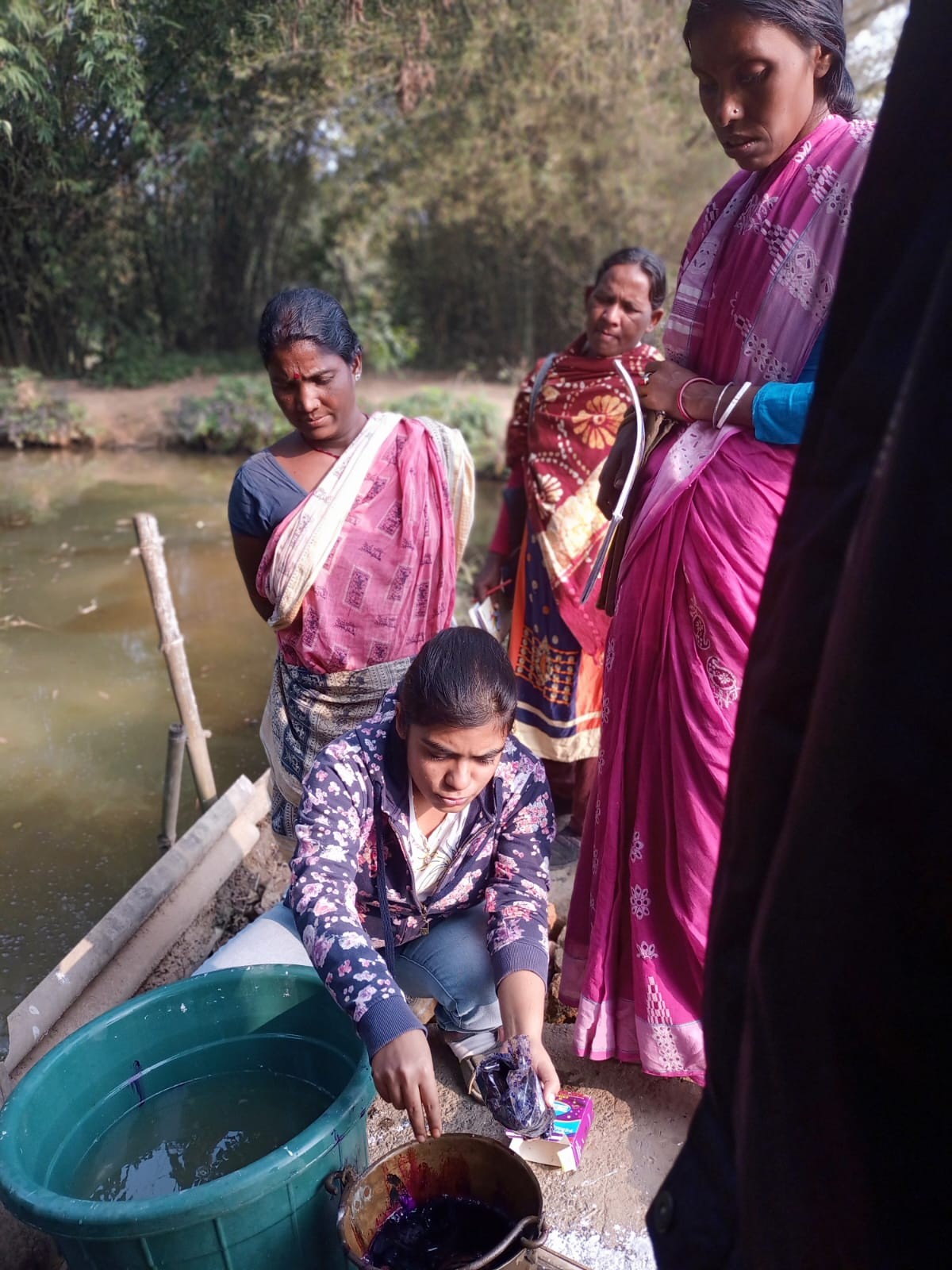
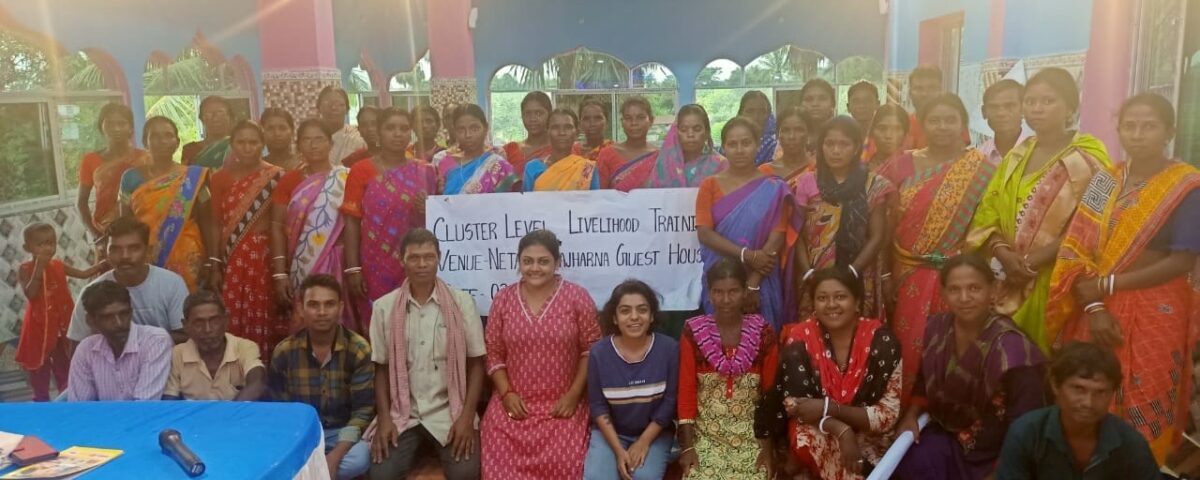
Photo: Barni Chatterjee with women farmers, demonstrating fisheries-related activities
Among all tasks, dragging the zero-mesh net remained the hardest. The depth of the ponds, the resistance of water, the weight of writhing fish and tangled weeds, it tested both body and will. Yet no one walked away. Instead, four or six women would wade in together, their hands gripping the same net, pulling in rhythm, turning what was once considered impossible into a shared act of resolve.
And then came the appreciation
With time, the laughter faded. As recognition began to flow in, from institutions, partners, and visiting teams; the taunts slowly gave way to acceptance. Men who once scoffed now watched in quiet acknowledgment as women claimed a livelihood they had been told was never theirs.
They mastered the use of drag nets and cast nets, emerging as exemplars not just for the block, but for the district. Teams from PRADAN’s partner organisations like Rural Development Association (RDA), PAN India, Development Research Communication and Services Centre (DRCSC), Shamayita Math as well as colleagues from Chhattisgarh and government officials, visited villages such as Baghghora, Korganala, Boro Brindabanpur, and Mohanpur under the Harinaganj VO in Dharampur Gram Panchayat, Binpur-I block. Each exposure visit ended the same way: with astonishment, and with questions that carried a new respect.
Together, we demonstrated the cultivation of high-value fish varieties like Indian Major Caprs (Catla, Rohu, Mrigal/ Bata), and giant freshwater prawns, along with small fishes and snails to cater to family's consumption needs and nutrition. The women became fluent in the technical language of fisheries like water quality management, stocking density, feeding cycles, vendor linkages. What had begun as an experiment soon evolved into a living classroom.
From a single village in Baghghora, the initiative spread across nine villages of Harinaganj VO, and eventually to more than eighty villages across six Gram Panchayats of Binpur-I block that is, Ramgarh, Sijua, Lalgarh, Dharampur, Belatikri, and Baita.
Yet even as the work gathered momentum, I remained oblivious to a danger far more insidious than ridicule, the greatest safety risk these community members were quietly facing.
A Sudden realization- hitting like a storm!
Buoyed by what we had achieved in West Bengal, I carried the same spirit with me when I moved to Bihar in 2024. I joined Araria as a Team Coordinator, and within six months we had once again demonstrated fisheries as a women-controlled livelihood, this time in a context where the activity was almost entirely male-dominated.
But the journey was far from smooth. It took me time to find my footing in Ghiwa village, in Parwaha Gram Panchayat of Forbesganj block. Unlike my earlier experience in West Bengal, where there was at least some social space for women to step out and engage, here the boundaries were far more rigid. In Bihar, especially among married women, mobility itself is a negotiation. Stepping out of the house requires permission, justification, and often, resistance.
Conversations did not begin with livelihoods, they began with trust. Repeated visits, sitting with families, speaking to their spouses and elders, listening more than explaining, this became the work before the work. Even when women showed interest, hesitation lingered. What would people say? Who would take responsibility if something went wrong? Fisheries, in particular, was seen as physically demanding and socially inappropriate for women. The idea of women entering ponds, dragging nets, or handling fish in public spaces challenged deeply held norms.
There were days when meetings would get cancelled because women could not leave their homes. Days when only one or two would turn up, unsure, looking over their shoulders. Progress was slow, often invisible. Each small step, attending a meeting, standing near the pond, touching the nets felt like an act of courage.
And yet, something began to shift. A few women stayed. They watched, they tried, they encouraged each other. Gradually, what seemed unthinkable started becoming possible.
The work was widely appreciated by stakeholders, and I quietly began to believe that my engagement with women in fisheries was the most meaningful success of my professional life.
Then came the storm.
One afternoon, Pooja Devi, one of our most active and articulate fish farmers in Araria, walked into my room with a concern. Around 30 years old, Pooja lives in Ghiwa village under Parwaha Gram Panchayat in Forbesganj block with her spouse, mother-in-law, and two children. Not very long ago, she was like many other rural women, confined to household responsibilities, her natural confidence and leadership subdued. Over time, she had emerged as a strong member and leader within the producer group, taking initiative in fisheries. Her family, too, had slowly begun to support her journey.
As she spoke, I felt the ground shift beneath me.
During fish harvesting, Pooja told me, leeches and other small aquatic creatures had entered women’s bodies and vagina cavities while they were working in the ponds. She and other women had encountered and removed leeches and worms from their bodies after harvesting, while insects and other small creatures could also be seen during netting. The risk was particularly concerning because most women did not use protective undergarments during their daily work, except during menstruation.
I was dumbfounded. Stunned into silence.
In that moment, everything I had been celebrating; the scale, the participation, the visible success felt incomplete. I realised I had overlooked something far more fundamental: women’s safety. The moment forced me to reconsider the work through a different lens. Until then, I had been focused on participation, scale, and women’s leadership in fisheries. But I had not adequately thought about the physical risks women were navigating within these spaces. As a woman, the realisation stayed with me deeply that an intervention intended to expand opportunities had also exposed them to vulnerabilities we had neither anticipated nor discussed openly.
It took time to fully absorb the weight of that realisation. And then, I knew I could not look away.
I began discussing the issue with my colleagues and tried to understand whether similar risks existed in other states. The more I asked, the more I realised that the issue had largely remained invisible, not necessarily because the risks did not exist, but because women were not always the ones performing the most physically demanding tasks. In states such as Chhattisgarh and Odisha, netting is still predominantly carried out by men, meaning women are less exposed to the risks associated with entering ponds and handling nets. In West Bengal, where fish farming is relatively more evolved and women have been more actively involved in the activity, the use of protective undergarments while entering ponds is also more common.
What struck me was how easily such a simple aspect of safety could be overlooked when the larger focus was on participation, income, scale, and women’s leadership. We had spent considerable time asking whether women could enter a livelihood that had traditionally belonged to men. We had worked to build their confidence, develop their skills, create acceptance within their communities, and demonstrate that they could manage fisheries themselves. But somewhere along the way, we had not asked a more basic question: what would it take to make this livelihood safe for them?
The solution was disarmingly simple: the use of a waterproof or synthetic undergarment, preferably like those used by swimmers, along with a legging worn over it while entering ponds. A small change, yet one that could make the activity safer and more dignified. The simplicity of the solution was, in some ways, what stayed with me most. The challenge was not necessarily always about finding a complex technical intervention; sometimes, it was about noticing the risks that had become normalised and creating the space to talk about them.
Although I was transferred from Araria to Baghmundi in West Bengal within a year, the lesson stayed with me. Wherever I now work, or wherever colleagues seek my guidance, I insist that protective measures be treated as a protocol rather than an afterthought. My commitment is no longer limited to promoting fisheries as a livelihood option, but to ensuring that it is safe, respectful, and truly replicable for women.
This experience also changed the way I look at success. Earlier, I saw women taking ownership of fisheries, entering ponds, handling nets, managing fish production, and engaging with markets as evidence that we had successfully challenged a gendered livelihood norm. I still believe those achievements matter. But I now understand that participation alone cannot be the measure of whether an intervention is truly women-led. If women have to compromise their safety or dignity to participate, then something fundamental is missing from the design of the livelihood itself.
That is why this learning could not remain confined to one team or one geography. Back in Bihar, the women have continued with fisheries, which in itself reflects their commitment and the value they see in this livelihood opportunity. Conversations around safety have begun, and there is now a greater awareness of the risks involved, something that was earlier unspoken and unacknowledged.
To take the learning forward, PRADAN organised an internal training-cum-field session with representatives from different states, focusing on promoting fisheries as a women-led and organic livelihood activity. The training was held in Jhargram, West Bengal, followed by field sessions in Lalgarh, where women have been leading the fisheries activity and practising organic fish farming. The sessions created an opportunity for colleagues from different states to observe the approach on the ground, understand the practices that have evolved over time, and reflect on how the learning including the importance of safety and protective measures could support their own work.
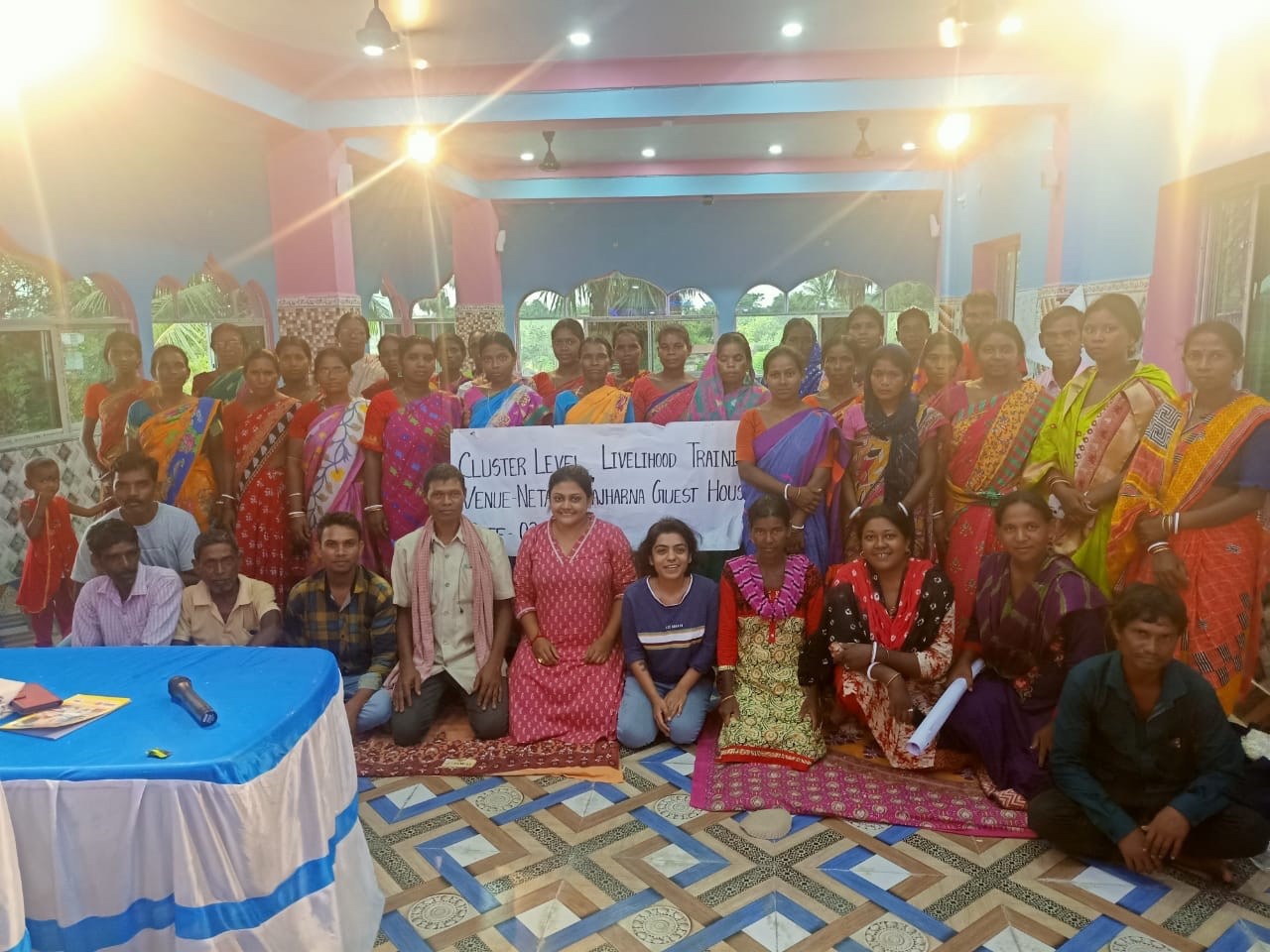
Photo: Barni Chatterjee at a training program
For me, this was an important shift: from demonstrating that women can do fisheries to asking what needs to be in place for women to do it safely, with dignity, and on their own terms. The first question challenged a social norm. The second challenged us as practitioners to examine our own assumptions and the gaps in our approach.
At the same time, translating this awareness into consistent practice remains a work in progress. While some initial steps have been discussed and explored, a systematic adoption of protective measures is yet to fully take shape. Awareness is only the beginning; protocols have to be consistently practised, discussed, reinforced, and adapted to different contexts. Building safe and gender-responsive systems requires sustained engagement, follow-through, and collective ownership.
Perhaps that is where the work stands today, not at completion, but somewhere in the middle: where the issue is recognised, the intent exists, and the journey towards safer practices has begun. For me, the greatest learning has been that a livelihood cannot truly be called empowering if safety and dignity are treated as secondary. The challenge now is to carry this learning forward with the same urgency with which we have carried the livelihood itself.
About the Author