
Can a Mango Build an FPO?
-Satyam Sharma, Executive, PRADAN
Special Inputs: Rajeev Ranjan, Integrator, PRADAN
Debanjan Ghatak, Integrator, PRADAN
Dr. Mahesh Kumar Dhakar, Senior Scientist, ICAR-RCER
What makes an FPO relevant and sustainable to its members? In Palkot, Jharkhand, this question led to a closer look at what the FPO already had; farmers, mango orchards and an existing market and how these could be brought together to create greater value. What emerged was the Mango Service Model, a year-round approach that strengthened farmer engagement, improved orchard productivity and quality, and opened new market opportunities, including exports to Italy. This is the story of how an FPO evolved by building on the strengths already present within its community.
Where It Started
The first night I slept in a mud house, I remember noticing the silence more than anything else. There were no passing vehicles, no city lights filtering through the windows; only the sounds of insects, distant conversations and a clear sky, full of stars which I had never really experienced before.
A few days earlier, I had arrived as a Development Apprentice with PRADAN, carrying the confidence that comes from classrooms and the uncertainty of stepping into an unfamiliar world. I was placed in Khijri, a village in Kamdara block of Jharkhand's Gumla district, about 75 kilometres from the district headquarters. Home to Munda, Kharia and Chik Baraik tribal families, the village moved to a rhythm very different from the one I had grown up in. Agriculture, livestock and forests shaped everyday life. Festivals like Sarhul, Karma and Sohrai were not occasions set apart from daily living, they were woven into it.
I grew up in Ayodhya in Uttar Pradesh, and most of my education had unfolded in cities. Until then, my understanding of villages had come through brief visits, reports and conversations. This was the first time I was living in one; not as a visitor, but as someone expected to become part of its everyday life. The transition was not effortless. I had never lived in a mud house before or walked into a forest to collect firewood. I found myself sitting beside women as they cooked over wood-fired chulhas, accompanying families to their fields, watching how the seasons shaped work, and slowly lending a hand wherever I could. What seemed unfamiliar in the beginning gradually became part of my daily routine.
Over time, I realised the bigger adjustment was not to the place, but to my own assumptions. I had arrived carrying an idea of what "normal" looked like, only to discover that normal is shaped by where and how people live. Rather than expecting the village to make sense through my lens, I slowly learned to see it on its own terms. I ate what people ate, walked where they walked, listened far more than I spoke and, without consciously planning it, began to settle into the rhythm of the community.
Trust, too, arrived quietly. In the beginning, I was an outsider whom everyone observed with curiosity. But as days turned into weeks, people began inviting me into their homes, sharing meals with me and including me in conversations that had little to do with work. Somewhere along the way, introductions changed. I was no longer just the new Development Apprentice; I had become someone familiar. What stays with me most from that time is not any particular activity or achievement, but the generosity with which families accepted me, often treating me like one of their own.
Looking back, I think that was the real purpose of the village stay. Before asking me to contribute as a development professional, it had first taught me to live alongside people, to observe without rushing to conclusions, to listen without immediately looking for solutions, and to appreciate that relationships are built in ordinary moments.
Much of what I learned later about working with communities can be traced back to those three months. Not to a training session or a project meeting, but to evenings spent in a mud house, long walks through the forest, shared meals and conversations that had no agenda. They reshaped the way I understood rural life and reminded me that meaningful development begins not with interventions, but with trust.
A Gesture I Never Forgot
As my village stay and study period drew to a close, I entered the Learning by Doing phase of my Development Apprenticeship journey. Having spent the previous months learning by observing and living alongside the community, I now began taking on responsibilities of my own.
During this time, my team in PRADAN was planning interventions for the Rabi season. By then, I had spent enough time in my stay village to understand its agricultural cycle. One thing stood out to me: after the Kharif harvest, large stretches of cultivable land were left fallow.
At first, I assumed it was because irrigation was unavailable. But conversations with women from the village revealed a different reality. Some families did have access to wells and other irrigation sources. The bigger constraints were financial and social. Investing in a second crop required money that many households did not have, and after the Kharif season, many men migrated in search of work, leaving women with limited labour to manage cultivation on their own.
These conversations found their way into a meeting of Champa Mahila Mandal, the village Self-Help Group. Together, with the support of my team, we began exploring whether cultivating collectively could reduce both the financial risk and the labour burden. What emerged was not a pre-designed project but a simple experiment: eight women decided to cultivate watermelon and cucumber together on a one-acre plot.
Over the next few months, we learned alongside one another. We raised the nursery, transplanted seedlings, managed the crop and dealt with the uncertainties that came with every stage of cultivation. By the end of the season, the group harvested nearly seven tonnes of produce and earned about ₹37,000. More importantly, they had demonstrated to themselves that land left unused after the kharif season could become a source of additional income.
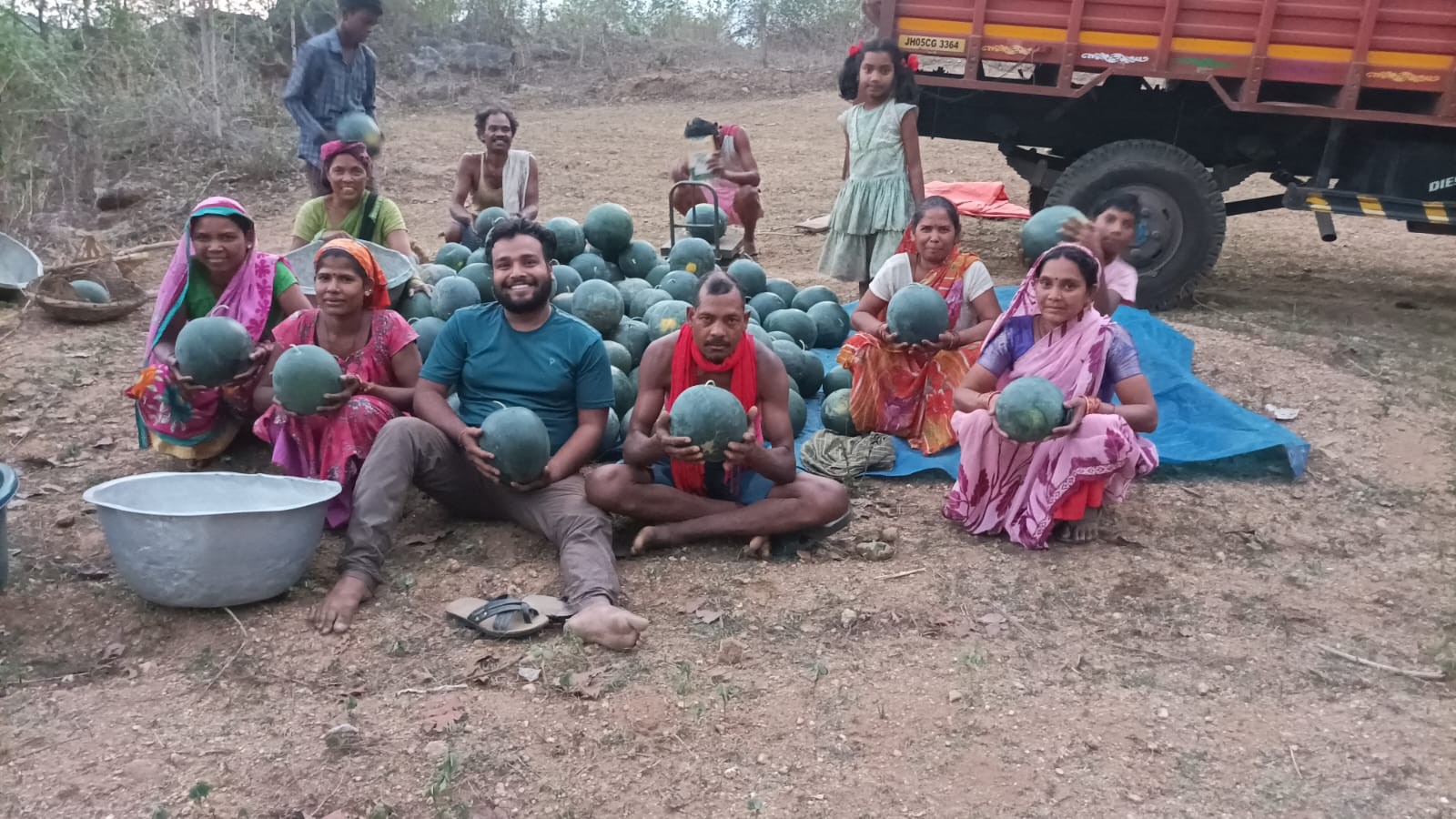
Photo: Farmers with their watermelon harvest
A few days later, Soneka Devi, the treasurer of Champa Mahila Mandal, invited me to attend their SHG meeting. When I arrived, the women were seated together, carefully calculating and distributing the earnings from the harvest.
After everyone had received their share, they turned to me.
The group had decided to give me ₹2,000.
I was taken aback and immediately declined. They smiled and insisted.
"You have done so much for us. This is a small token of appreciation from us, for you”
I still did not accept the money which they later deposited to the savings account of the SHG.
But I carried that moment home with me.
Only a few months earlier, these same women had spoken about not having enough money to cultivate a second crop. Now, from the income they had earned through their own effort, they wanted to set aside a part of it for me.
The ₹2,000 never came home with me.
The impact did.
Where My Interest in FPOs Began
Parallelly, around this time, my engagement with the field became more active, bringing with it new opportunities to understand rural institutions from within. My friend and colleague, Wasim Akhtar, who has been with PRADAN as an Executive since 2014, was also involved in establishing the NABARD-promoted and PRADAN-supported Kamdara Farmer Producer Company (FPC). Since my field area also fell within the FPC's operational area, I found myself closely associated with its early journey.
My role was modest at first. I supported farmer mobilisation, travelled across villages, met producers and participated in conversations about why farmers should come together as shareholders of a producer company. While these activities were part of my responsibilities, I gradually realised I was witnessing something much larger. I was seeing, almost from the beginning, how an institution takes shape, not simply through registrations and meetings, but through countless conversations, patient mobilisation and the slow process of building collective confidence.
Until then, Farmer Producer Organisations (FPOs) had been just another development concept I was familiar with in theory. Working with the Kamdara FPC gave that idea a very different meaning. The more time I spent with farmers and the institution, the more questions I found myself asking. How does a producer company earn the trust of its members? What enables farmers to see value in collective action? More importantly, what allows such an institution to remain relevant and sustainable long after it has been established?
Looking back, I realise my interest in FPOs did not begin with a conscious decision to specialise in them. It emerged from proximity, by having the opportunity to watch an institution evolve from its earliest days and by becoming curious about the processes that made that evolution possible.
Looking for an FPO Model That Actually Works
After completing my Development Apprenticeship, I was posted to Palkot, another block in Gumla district. By then, my experience with the Kamdara Farmer Producer Company had sparked a lasting interest in FPOs, and I was eager to continue working with them.
In Palkot, I had the opportunity to work closely with Krishi Bagwani Swavalambi Sahkari Samiti Ltd., an FPO established by Mahila Vikas Mandal, a Block Level Federation in 2003 and one of the earliest producer institutions supported by PRADAN in the region.
The institution was doing many things well. It raised nurseries, supplied agricultural inputs, organised farmer training and provided a range of services to women farmers. Yet I found myself becoming increasingly curious about another aspect of its work: its business.
I began reading financial statements, reviewing business records and tracing how different activities contributed to the FPO's income. The more I looked, the more one question stayed with me. If an institution with such a long history was still dependent on external support to comfortably meet its operating costs, what was preventing it from becoming financially self-sustaining?
Rather than searching immediately for new business opportunities, I decided to look more carefully at what already existed. Which activities generated consistent income? Which ones had room to grow? More importantly, which businesses were rooted in the strengths of the members themselves rather than being introduced from outside?
As I explored these questions, one activity kept drawing my attention: mango aggregation and marketing. Farmers were already cultivating mangoes, markets already existed, and the cooperative had experience in aggregating and selling the produce. What struck me most was that the cooperative's greatest strength was already in the hands of its members. A significant number of women shareholders owned mango trees or orchards. The resource that could potentially strengthen the institution was not something it needed to create; it was already growing in the villages it served.
That realization made me look at the landscape differently. As I travelled across villages in Palkot, I began noticing mango trees everywhere. Almost every household had them, some with a few dozen trees, others with a hundred or more. The raw material for a strong business already existed. The orchards, however, told a different story. Most trees were old and had received little management over the years. Dense canopies, increasing pest attacks and declining productivity had become common. The fruit that was harvested varied widely in quality, and many farmers had simply accepted this as the natural state of their orchards.
The question in my mind shifted once again. Instead of asking how the FPO could sell more mangoes, I started asking how it could help its members grow better ones. If farmers could improve productivity and quality at the orchard itself, the cooperative would not just have more produce to market; it would have the foundation of a stronger and more sustainable business.
That simple shift in perspective became the starting point of what we later came to call the Mango Service Model. But the model did not emerge as a ready-made solution. It took shape gradually, through a process of learning, consultation and field-level discussions. We began by reflecting on the FPO's previous experience of working with mango farmers and identifying the key gaps farmers faced in orchard management, timely input availability, technical guidance and marketing. To better understand the technical requirements of mango orchard management and identify practices that could be practically implemented at the farmer level, the team consulted experts from Indian Council of Agricultural Research - Research Complex for Eastern Region (ICAR-RCER).
At the same time, discussions with mango farmers helped us understand their existing practices, the challenges they faced, their willingness to adopt new practices and, importantly, the kind of support they actually needed. The learnings from previous field experience, technical consultations and conversations with farmers were then brought together to shape the service package.
The model that emerged brought together timely technical guidance, input support, orchard management practices and market linkage through the FPO. In this sense, it was not designed as a fixed package from the beginning. It evolved through continuous interaction between the institution, technical experts and farmers, ensuring that the services were both technically sound and practical for farmers.
The next question was whether this idea could work in practice. Before asking farmers to adopt the model at scale, we needed to test it ourselves. That is where the first demonstration began.
The First Demonstration
The idea seemed logical on paper. But logic alone does not build institutions. Before anyone else believed in it, we had to find out whether it would actually work. The first person I discussed it with was Sukarmuni Dhanwar, the President of the FPO. From there, the conversation moved to the Board of Directors. After several rounds of discussion, the board agreed to test the idea. The FPO took around ₹4 lakh from its own savings account and together we identified a 12-acre cluster of mango orchards in Pahadtoli village for our first demonstration.
Before entering the orchards, we first presented the idea to the Alenkera Pahadtoli Gram Sangathan. We selected this Village Organisation (VO) because it had a 12-acre mango patch and was one of the more active VOs in the area. This made it a suitable place to begin our engagement and explore the idea with the community. The women did not need to be convinced that there was a problem. Many of their mango trees were over a decade old. Productivity had declined, fruit quality had deteriorated and the orchards had gradually lost their vigour. The question was whether better orchard management could reverse that trend. Seventeen women farmers chose to take that chance with us.
Over the following months, we worked together on orchard rejuvenation through pruning, canopy management, nutrient application and plant protection measures. Turmeric was introduced as an intercrop to make better use of the space between the trees and create an additional source of income. ICAR-RCER also provided technical support for the initiative.
Even then, certainty was never part of the process.
The FPO had invested money from its savings. The women had entrusted us with orchards that many of their families had nurtured for years. I often found myself wondering whether we had overlooked something important. To ensure that we learned from the experience, we carefully documented the condition of the orchards before and after the intervention instead of relying only on observation.
When the harvest arrived, the results exceeded our expectations.
Average mango production nearly doubled, from about 15 kilograms per tree to around 30 kilograms. Fruit quality improved significantly, with larger and more marketable produce. The turmeric intercrop, introduced as a complementary activity, yielded close to 10 tonnes of raw turmeric. The women had witnessed every step in their own orchards. They had seen the trees being pruned, the changes in the canopy, the fruit developing over the season and, finally, the harvest itself. As Kunti Devi from Pahadtoli village shared, “I had been growing mangoes for years, but many practices were based on what we had always done. After joining the service model, I started following the technical advice more systematically. I feel this kind of support can help farmers improve their orchards and income over time.”
Her experience reflected an important part of the demonstration: the evidence was not something presented to the women from outside. They had seen the changes unfold in their own orchards and experienced the difference themselves. The evidence belonged to them as much as it did to the FPO.
The results were encouraging. The next step was to build on this early success and turn it into an approach that the FPO could adopt and scale. Fortunately, I was never carrying that question alone. What began as an experiment gradually became a collective effort.
As we reached out to farmers, me and my colleagues travelled across 45 villages, often spending days in the field and evenings conducting Ratri Chaupals to engage women and their families. They organised village meetings, facilitated training, followed up with farmers, and stayed closely involved as the intervention expanded from one orchard to another.
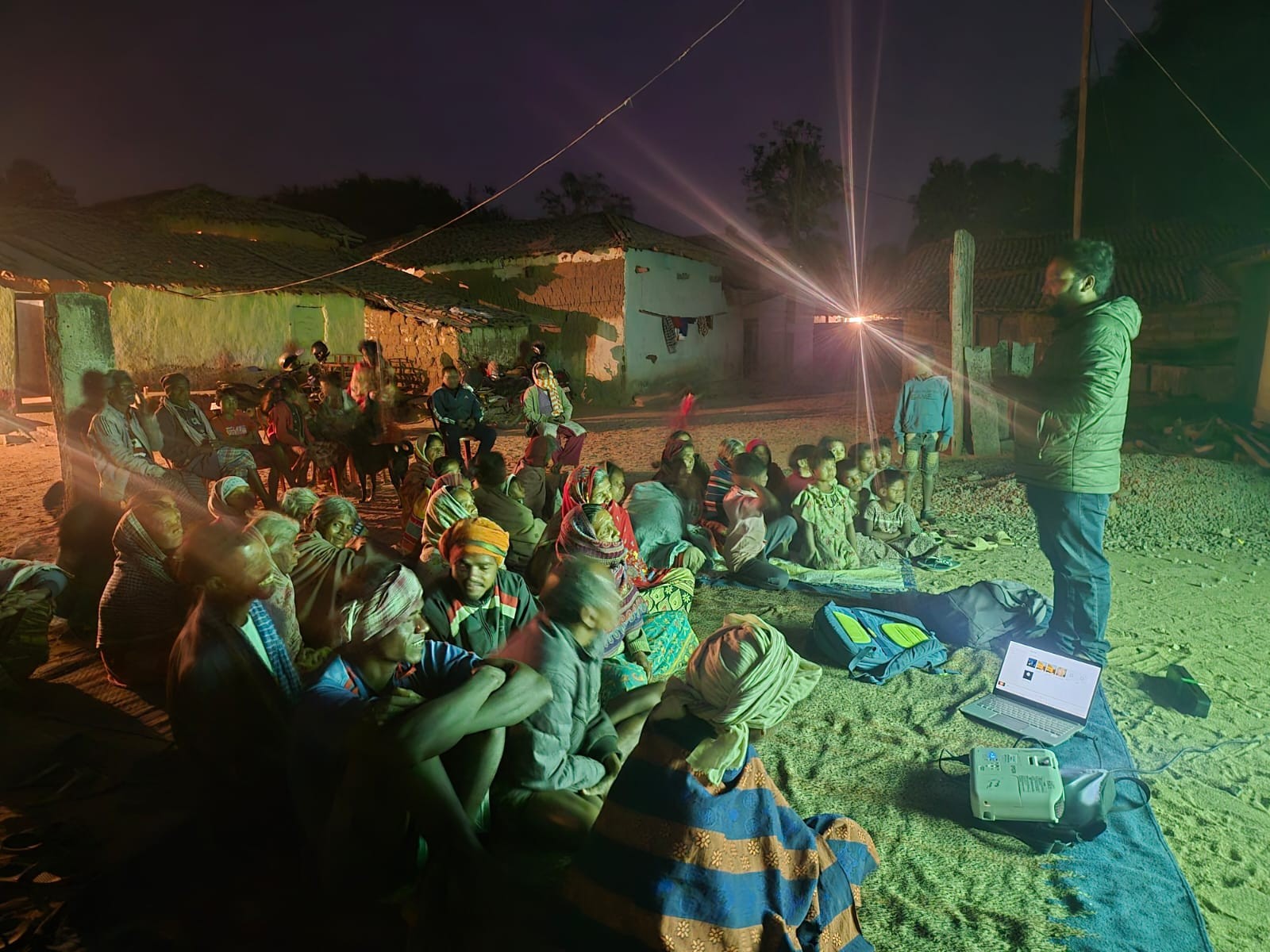
Photo: Ratri Chaupal being conducted in a village
The team encouraged us to think through challenges, offered timely guidance, and, equally importantly, gave us the confidence and space to experiment. This reinforced something I had begun to recognise during my Development Apprenticeship: meaningful change becomes possible when people have trust in the process, a sense of shared ownership, and the confidence to experiment together. What started as an uncertain idea had gradually become a shared endeavour of the team, the FPO and the women farmers themselves.
The Mango Service Model Takes Shape
The success of the first demonstration gave us confidence to take the approach to more farmers. This meant finding a way for the FPO to deliver the service in a manner that was simple, consistent and financially viable.
Until then, most farmers approached the FPO only when they needed to buy an input, usually pesticides or fertilisers, or when they wanted to sell their produce. The relationship was largely transactional. Once the purchase was made, the interaction ended until the next requirement arose.
We wanted to change that.
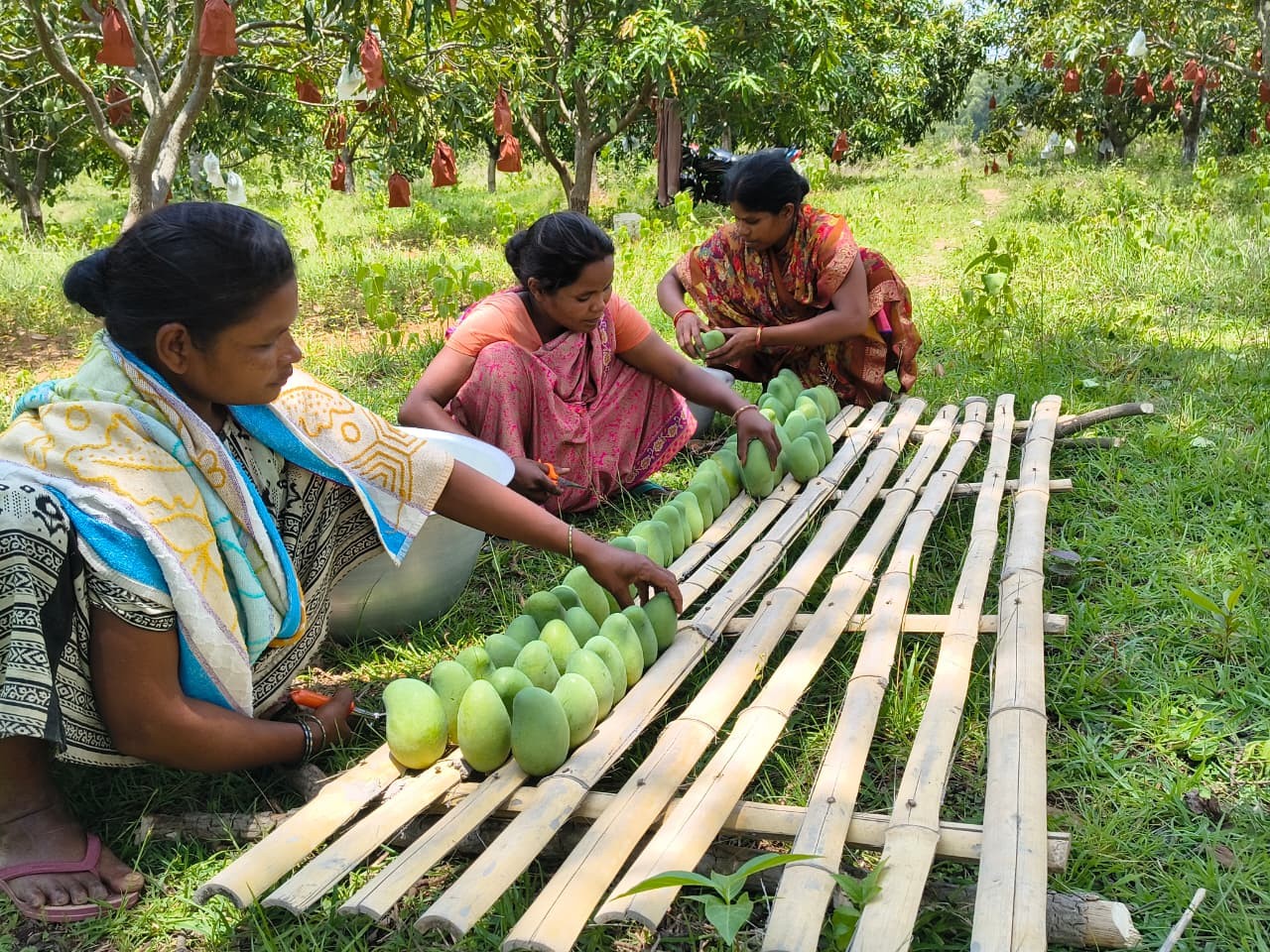
Instead of offering individual products, the FPO introduced a year-long Mango Service Model at ₹150 per tree. The idea was simple: rather than selling inputs, we would accompany the tree through its entire production cycle. The package included orchard rejuvenation, nutrient management, plant protection, regular field visits, technical guidance and, eventually, support in aggregating and marketing the harvest.
In other words, farmers were not paying for a pesticide or a fertilizer. They were paying for a service, a relationship that continued long after a single transaction. We also realised that no amount of explanation in meetings would convince farmers as effectively as evidence from another farmer's orchard. So, our team regularly took interested growers to the demonstration plots in Pahadtoli. They could see the healthier trees, compare the harvest and, most importantly, speak directly with the women who had participated in the first trial. The demonstration became our strongest form of communication because it allowed farmers to trust what they could observe for themselves.
As more farmers joined, the FPO began delivering these services through Agriculture Entrepreneurs (AEs), field-level cadres trained in mango cultivation and orchard management. Working closely with growers across villages, they ensured that orchard operations happened on time, visited farmers regularly and acted as a bridge between the members and the FPO. This meant the FPO was no longer interacting with farmers only during the buying or selling season. It was present throughout the year.
By 2025–26, the model had expanded to nearly 50 acres of mango orchards.
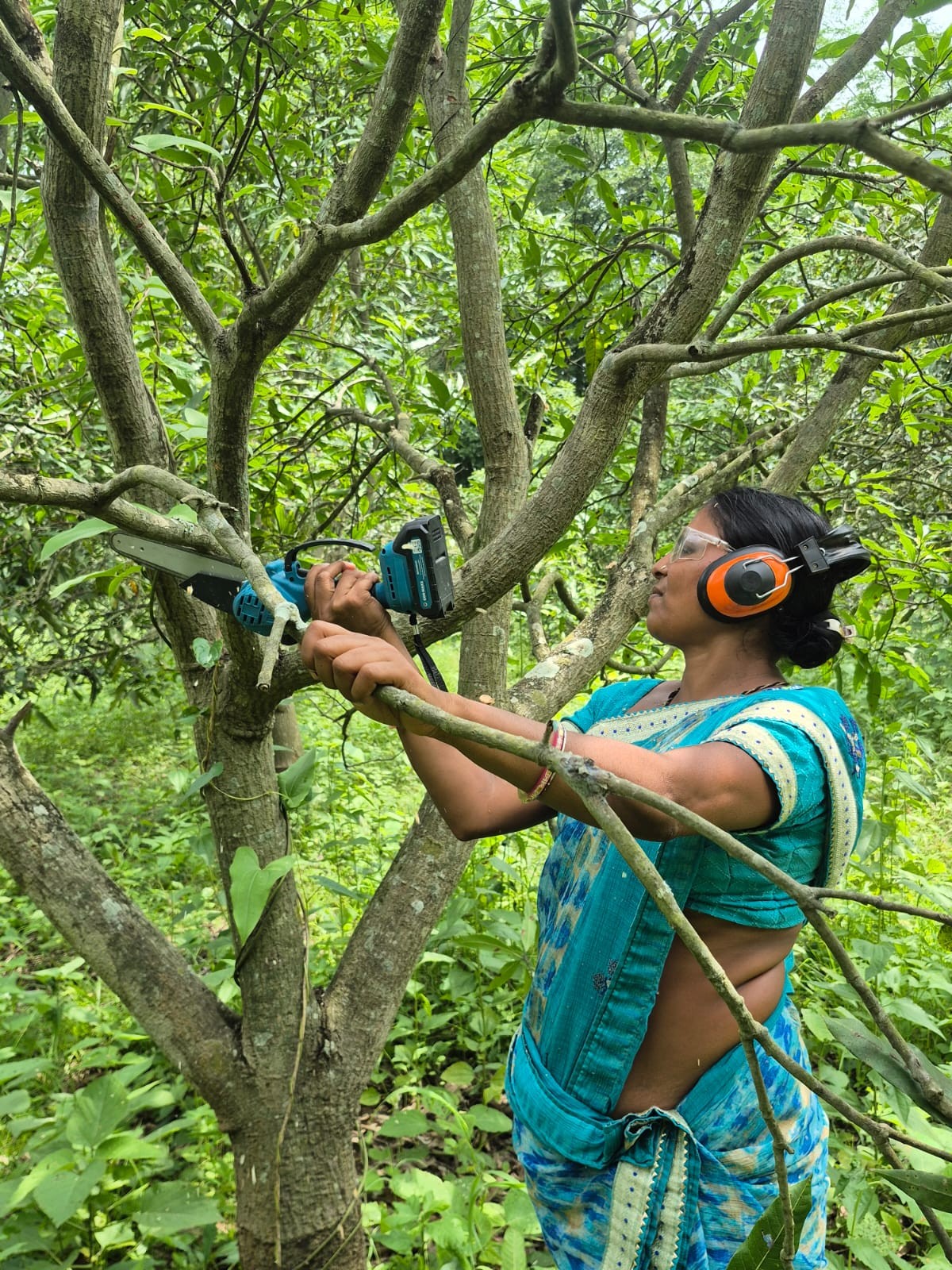
Photo: Pruning for healthier trees, better fruit and better returns.
The orchards became more productive. But just as importantly, the relationship between the FPO and its members grew stronger.
That was when I began to realise that we were beginning to build an institution that stayed relevant to farmers throughout the year.
When the Numbers Started to Show It
By June 2025, it was time for mango marketing. The FPO already had relationships with local mandi traders, so we were not entering the market from scratch. During the 2025–26 season, we aggregated and marketed around 163 metric tonnes of mangoes, supplying buyers across Odisha, West Bengal, Bihar and Uttar Pradesh.
Over the previous months, we had invested considerable effort in improving orchard management through pruning, canopy management, nutrient application and regular technical support. The next question naturally followed: if better orchards produced better mangoes, could better-quality fruit also help farmers access better markets and earn higher prices?
That question shaped our work in the following season.
Alongside expanding aggregation, we began paying much closer attention to fruit quality. With technical guidance from ICAR–RCER, we introduced paper bagging of mangoes, a practice that improves the appearance and quality of the fruit.
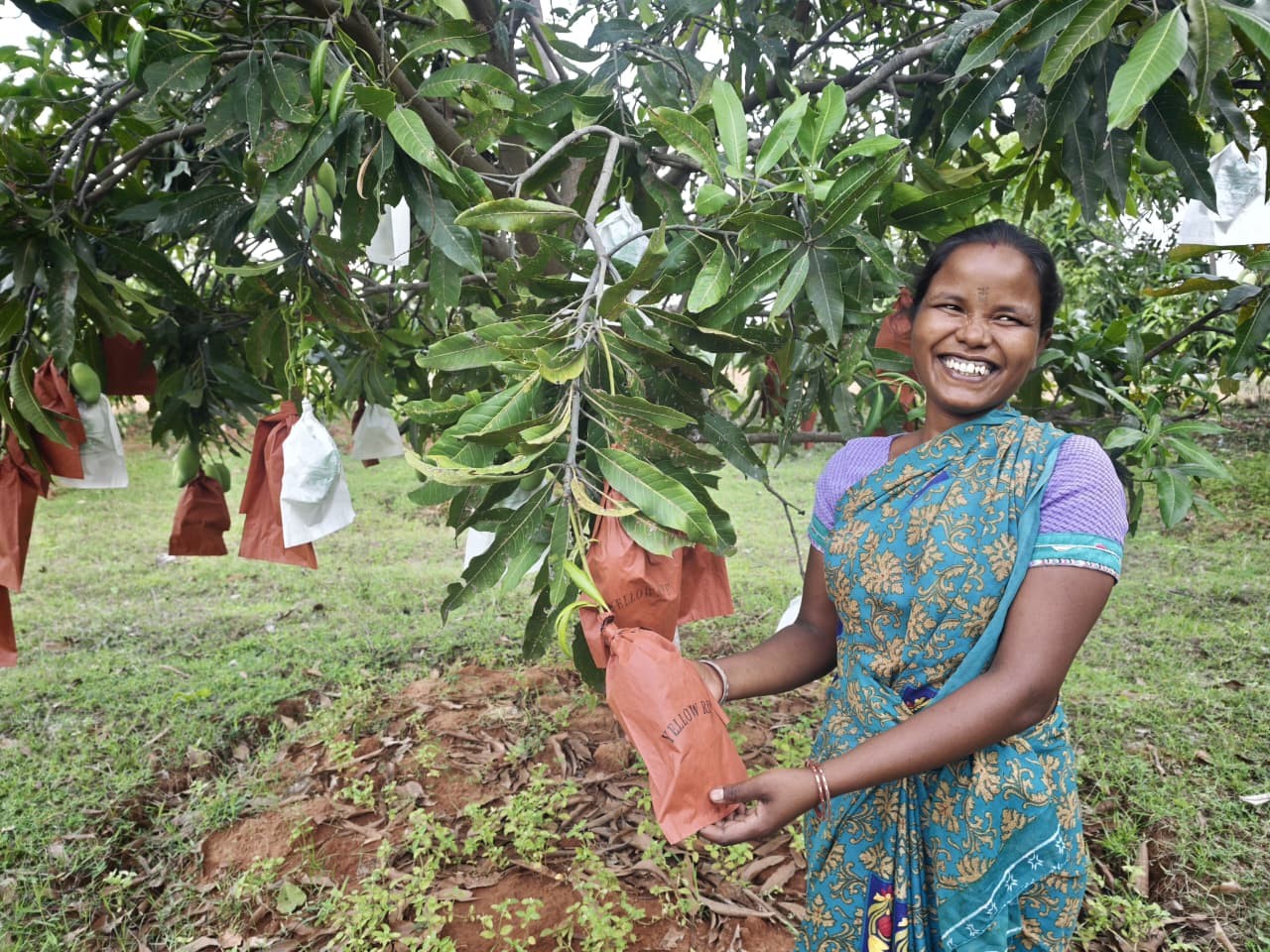
Photo: Farmers following improved orchard management practices like paper bagging of mangoes
As more farmers joined the service model and more orchards came under improved management, the scale of aggregation grew. In the 2026–27 season, the FPO supported mango cultivation in around 200 acres, marketing around 304 metric tonnes of mangoes, almost double the previous year's volume.
The FPO also partnered with JGB Agrofresh Private Limited (JGB Group), a Kolkata-based exporter and a Government of India-recognised Star Export House and Authorised Economic Operator (AEO), to explore export opportunities. Preparing mangoes for an international market demanded a very different level of quality. Fruit selection became more rigorous, and practices such as orchard management and paper bagging, which we had been strengthening over the previous year, became even more relevant.
That season, around two metric tonnes of mangoes from Palkot were exported to Italy.
The numbers told their own story. While mangoes sold in the local market fetched around ₹17 per kilogram, the export-quality fruit realised nearly ₹42 per kilogram.
I do not see the Italy export as a standalone achievement. It was the outcome of a much longer journey, one that began with a simple question about why the orchards were underperforming. Every step that followed, from rejuvenating trees and building the Mango Service Model to staying connected with farmers throughout the year and investing in quality gradually made that opportunity possible.
The export was significant not because it was international, but because it showed us what became possible when the FPO invested in strengthening its members before expanding its markets.
Why The Model Works
What made the Mango Service Model effective was that it addressed the production process rather than only the market.
Many FPOs primarily engage with farmers at the stage of procurement and marketing. By then, however, the decisions that influence yield and fruit quality have already been made in the orchard. Our experience showed that if the FPO could support farmers throughout the production cycle, that is, through orchard rejuvenation, technical guidance, regular monitoring and timely interventions, it could influence both productivity and quality long before the harvest. This also helped ensure that the produce met the quality standards expected by the market, creating a stronger link between what happened in the orchard and the market the FPO could access.
This also changed the nature of the relationship between the FPO and its members. Instead of interacting with farmers only during the buying or selling season, the FPO remained engaged with them throughout the year. That continuity strengthened trust while creating opportunities to improve orchard performance.
Photo: Preparing the harvest for the market: Desapping in mango
For the institution, the model created two complementary sources of value. Better-quality produce enhanced the possibility of the product getting sold in the market, while the mango service fee provided an additional and more predictable income stream. In that sense, the model was not just about selling more mangoes; it aligned the interests of the farmers and the FPO, making the growth of one dependent on the success of the other.
What I Learned Beyond Mangoes
The journey also left me with a much broader lesson about development.
Many of us enter the field believing that meaningful change begins with a new idea. My experience was almost the opposite. More often than not, the answers were already present; they simply needed to be seen differently.
The mango trees had always been there. Farmers had cared for them for generations. Markets for mangoes already existed. None of these were new. What was missing was an institutional arrangement that could connect these existing strengths in a way that created greater value for farmers and for the FPO itself.
That experience has stayed with me far beyond mangoes. Whenever I encounter a new challenge now, I find myself resisting the urge to immediately search for a new solution. Instead, I first ask a different question: What already exists here that we have not fully recognised?
A Note on How the Ideas Took Shape
None of these ideas emerged fully formed. They evolved through continuous conversations; with farmers, the FPO Board, colleagues and technical experts and by paying close attention to what the field was telling us.
Most decisions were not made in meeting rooms. They were made after visiting orchards, listening to farmers' experiences, discussing observations with the team and then returning to the field to see whether our assumptions held true. When we were uncertain about technical aspects of orchard management, we sought guidance from colleagues as well as ICAR-RCER. Their support gave us the confidence to experiment while remaining grounded in sound technical knowledge.
This experience also reinforced that meaningful institutional change is never the work of one individual. Farmers brought generations of knowledge about their orchards. The FPO Board was willing to take difficult decisions and invest in new ideas. Agriculture Entrepreneurs and field colleagues remained closely connected with farmers, ensuring that the model could move beyond a single demonstration. My role was only one part of a much larger collective effort.
Perhaps that is the most enduring lesson I carry from this journey. Good ideas rarely arrive as complete solutions. They take shape gradually, through observation, dialogue, experimentation and the humility to change course when the field teaches you something new.
This article is my attempt to document that process. Too often, we record the outcomes of development work but not the questions, uncertainties and collective learning that make those outcomes possible. I hope this reflection captures a small part of that journey.
What Comes Next
For me, the Mango Service Model is not just about mangoes. It offers a different way of thinking about the role of Farmer Producer Organisations.
Too often, FPOs engage with farmers only at the point of procurement and marketing. Our experience suggests that a stronger institution begins much earlier, by helping farmers improve production itself. When an FPO becomes part of the production cycle, it is able to improve productivity and quality while creating a more sustained relationship with its members. At the same time, service-based revenue complements its trading business, making the institution itself more resilient.
The model also has the potential to grow beyond the initial demonstration. In Palkot alone, thousands of mango trees already exist across tribal households. Bringing more of these orchards under systematic management could significantly improve farmer incomes while strengthening the FPO's business. The same principle could also be adopted for other perennial crops and farming systems where farmers already possess productive assets but require continuous technical and institutional support to realise their full value.
Perhaps that is the larger possibility this journey points towards, not simply producing or marketing more, but building FPOs that remain relevant to farmers throughout the year.
What I Still Carry
When I think about this journey today, my mind rarely goes first to export consignments, turnover figures or the number of orchards we worked with.
Instead, I remember a small SHG meeting where a group of women tried to hand me ₹2,000 from the earnings of a crop we had cultivated together.
I did not accept the money. But I have carried that moment with me ever since.
It reminded me that the most meaningful outcomes of development work are often not the ones that appear in reports or balance sheets. They are found in the relationships that make collective action possible in the first place.
I realise that every stage of this journey, from living in a village for the first time, to working with an emerging FPO, to building and refining the Mango Service Model was shaped by the same underlying principle. Institutions become sustainable not simply by creating markets, but by solving problems that matter to their members and earning their trust along the way.
Everything else, I have found, tends to grow from there.
Acknowledgement
This journey was never an individual effort. It was shaped by the collective commitment, ideas and support of many people.
I am deeply grateful to Rajeev Ranjan, Integrator, PRADAN, whose guidance and encouragement were instrumental in shaping the thinking behind the Mango Service Model and in helping translate an idea from the field into a structured approach with the potential to scale. I am also thankful to Debanjan Ghatak, Integrator, PRADAN, for his consistent support to the FPO and for providing guidance and encouragement that helped strengthen its functioning and growth.
I am also grateful to Dr. Mahesh Kumar Dhakar, Senior Scientist, ICAR-RCER, for his technical guidance, which informed several key decisions on orchard management throughout the journey.
My sincere appreciation goes to the entire team of Krishi Bagwani Swavalambi Sahkari Samiti Ltd. (KBSSSL) for their dedication and perseverance at every stage of this process. I would especially like to acknowledge Rajesh Oraon, FPO Manager, and Suraj Munda, Block Coordinator, whose tireless work with farmers, in the orchards and within the FPO transformed ideas into practice.
Finally, I am indebted to the women farmers, members of the Gram Sangathans and the Board of Directors of KBSSSL, who placed their trust in new ideas, took risks alongside us and made this journey of learning possible.
About the Author