
From the Periphery to the Centre: Moving beyond discourses to shared journeys
-Ammu Thankam Mathew, Development Practitioner
This article, authored by PRADAN alumnus, Ammu Thankam Mathew, was first published by ASSURE (Agency for Social and Spiritual Upliftment, Renewal and Empowerment) and has been reproduced here with minor edits. It captures her reflections and experiences as a development practitioner working in Scheduled Areas, with a focus on tribal communities.
Last year, I had the opportunity to write an article for Assure (Agency for Social and Spiritual Upliftment Renewal and Empowerment) about my reflections and experiences as a development practitioner who worked in the scheduled areas. This year, when I was invited to contribute again, I said no at first. One of the reasons for saying no was that I didn’t know what to write about.
There has been a plethora of published content- online and otherwise- that deals in depth with the issues that the Adivasi community faces, the root causes of these issues, criticisms of existing tribal development policies, some potential ways forward and so on. A lot has been said- Adivasi lives have been theorised, their struggles glorified, and their needs emphasised. However, while conveying ideas on their behalf, we have not tried everything that can be done to support them in recognising their aspirations.
I once had a colleague who told me that ‘a lot of people come to study Adivasis, highlight a development question/puzzle, and then leave’. He was conveying that people seldom try and succeed in changing the status quo. The sad reality is, he was right then, and he still is.
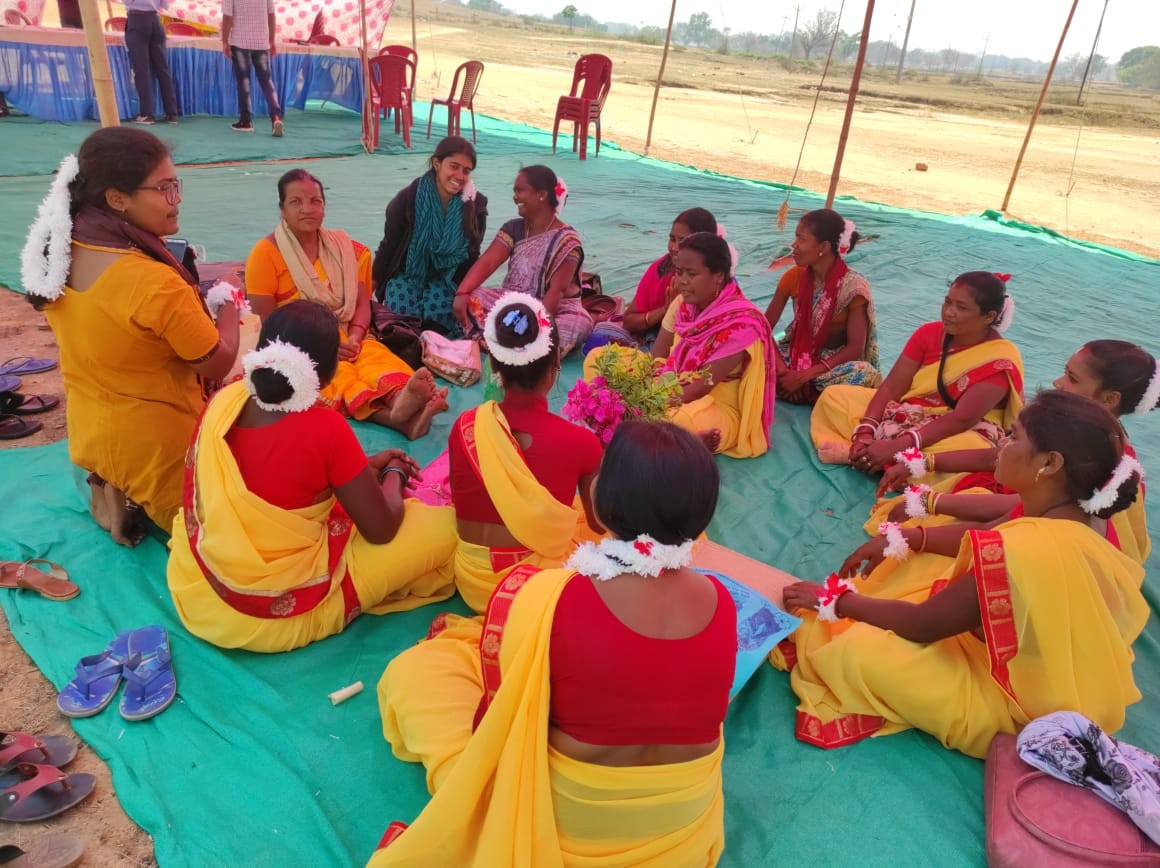
Photo: Ammu, in a conversation with the community members
As I said before, I do not have anything new to add. So I’ll use this opportunity to share why I chose to work in a scheduled area, why I chose to stay there, and why I left.
THE ULLADAS OF ALLEPPEY
Roughly eight years back, I stumbled upon a few Ullada women during one of my internships. Initially forest dwellers, the Ulladas are now a scattered tribe seen in various districts of Kerala. These women were working at a small production unit set up by the government, as part of a rehabilitation and livelihood generation program. My task was to study the long-term viability of the unit and the challenges that these women faced while working there. I used to spend entire days with them- conversing, laughing, having food together, etc. It was during this brief period that the ‘Adivasis’, who existed somewhere in the periphery, came to the centre stage for me.
I met women who were previously exploited, harassed and discriminated for their socio-economic status. The same women were now turning their lives around by dedicating themselves to this venture. I met strong and brave women, full of hopes, dreams and ambitions, determined to do their best to make their unit a success, thereby securing their and their family’s future. A small intervention- a big impact.
Of course, I studied them, said my goodbyes, and submitted a report to my mentor. But I made a mental promise to return to them. Although I joined the same organisation again for my next internship, what awaited me this time was a project in Attappady of Palakkad district- the only tribal taluk in Kerala. I am not exaggerating when I say that Attappady was a life-changing experience.
THE KURUMBAS, MUDUGAS AND IRULAS OF ATTAPPADY
For a 21-year-old me, Attappady was a name I’ve read about- a forest area, dominated by tribals, very backward, isolated and with Naxal presence. In my stereotypical imagination, I was leaving civilisation behind and going to live in a place with no facilities and digital connectivity. A major part of me was scared. Looking back, I realise how naive and prejudiced I was.
My prejudices were shattered, and my ideas of Adivasi life began to take shape in Attappady. I observed the community's way of life, culture, agricultural practices, and worldview. I saw a form of wisdom in them, so different from the mainstream worldview yet more advanced and relevant in many ways. I saw the concern and pain behind the smiles of the elderly as they spoke of the erosion of their language and practices. I saw villages banding together to challenge the limitation of the Forest Rights Act (2006). I saw interventions that empowered the people, yet at times threatened to homogenise their distinct culture. I realised how well-intentioned ‘development activities’ can end up with contradictions and negative implications.
Attappady taught me that my birth into a mainstream society and my privileges do not make me a better human being. The people there and the lessons I learned sparked the desire in me to do something for the community- a spark I nurtured to a flame during my stint in Jharkhand.
THE ORAONS OF JHARKHAND
Later, I went to Jharkhand as a young apprentice in an NGO. Initially, I struggled to fully understand and converse in Hindi. I would attend village gatherings and candidly share my predicament with them. I told them that I am from Kerala and asked them to bear with me while I learn. I still remember the acceptance that I received from the villagers of Anjan village in Gumla District. From then on, I was known as the ‘Kerala Maiyya’ (roughly translated as ‘the Kerala daughter’). From then on, after every meeting where I led the discussion, the villagers would come to me and tell me that I spoke well, that I improved compared to the last time, and that I should keep it up. From then on, they became my family.
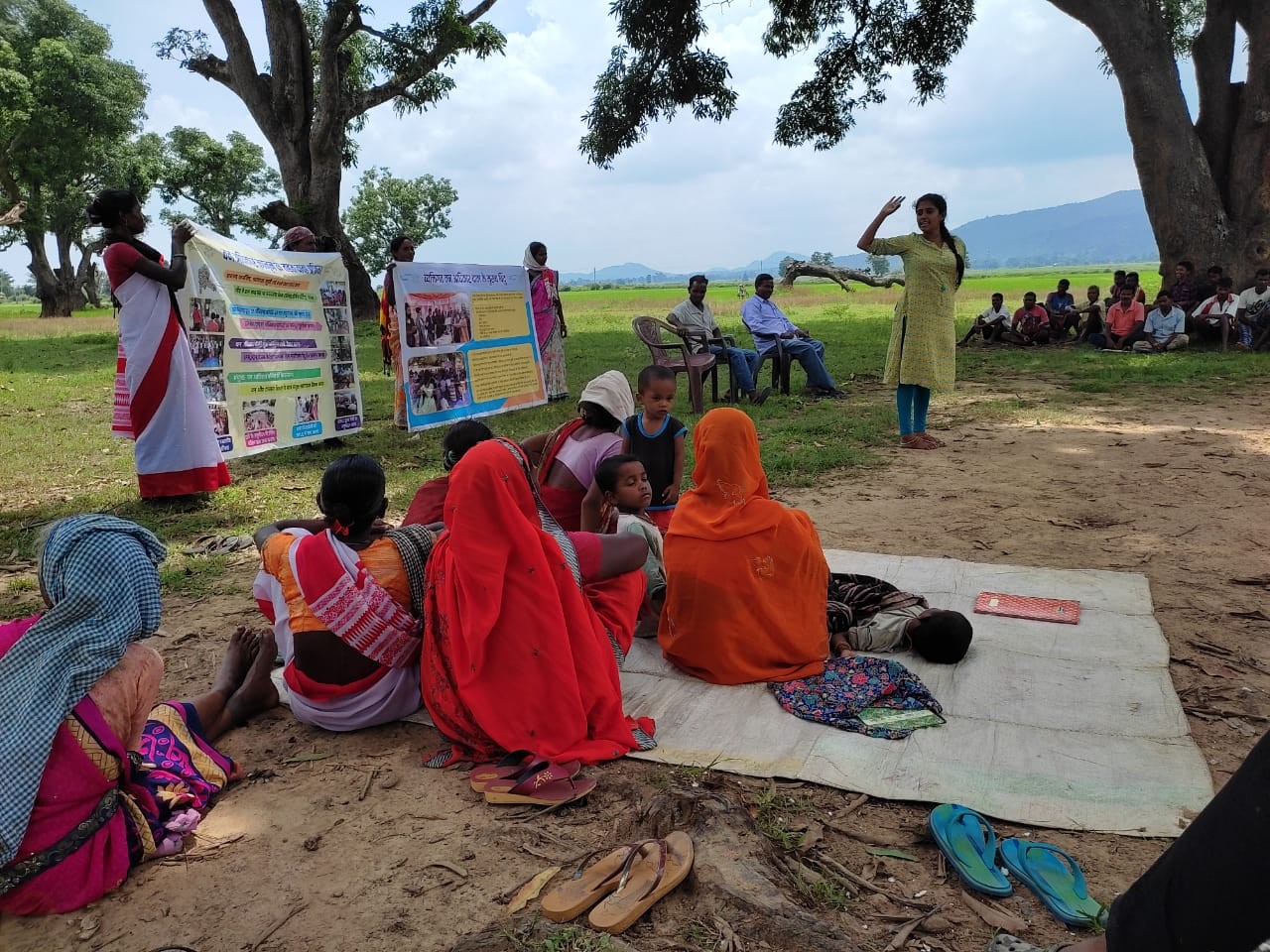
Photo: Ammu interacting with the villagers in Gumla, Jharkhand
I engaged with the well-off families and the poorest of the poor- both would welcome me to their homes and always offer me something to eat/drink, even from the little they had. I worked with women's SHGs, Gram Sabhas, Panchayats, and the administration in a multidimensional approach. I witnessed their coherence and their stratification; their hope and disappointment; their strength and weakness; their liberal approaches and their conservative views. I saw talented women and men, great leaders, and passionate social workers. I worked with them, and all of them had something to teach me- to help me grow into the person I am today.
NOT ALL THINGS ARE ROSY
Till now, I’ve been talking about the positives I’ve learned from the Adivasis. But that does not mean a complete absence of social evils.
I have been asked about my caste identity and, at times, discriminated against based on it. I have been discriminated against based on my gender. With a broken heart, I have observed how women casually discuss the domestic violence they faced. I have been terrified by the examples of witch-hunting that still happen. I have seen innovative corruption practices. I have helplessly listened to accounts of child marriages. All these vices very much exist in these communities- maybe in different forms.
But before we judge the Adivasis as ‘uncivilised’, there is a question I’d like to raise- are we that much different from them? Doesn’t the educated ‘mainstream’ society still have some or all of these social evils, albeit in a more hushed tone? Are we right to judge or patronise the Adivasis for the ‘speck of sawdust in their eyes, while ignoring the plank in our own’? How can we offer to ‘take the speck out of their eye’ while all the time there is a plank in our own?
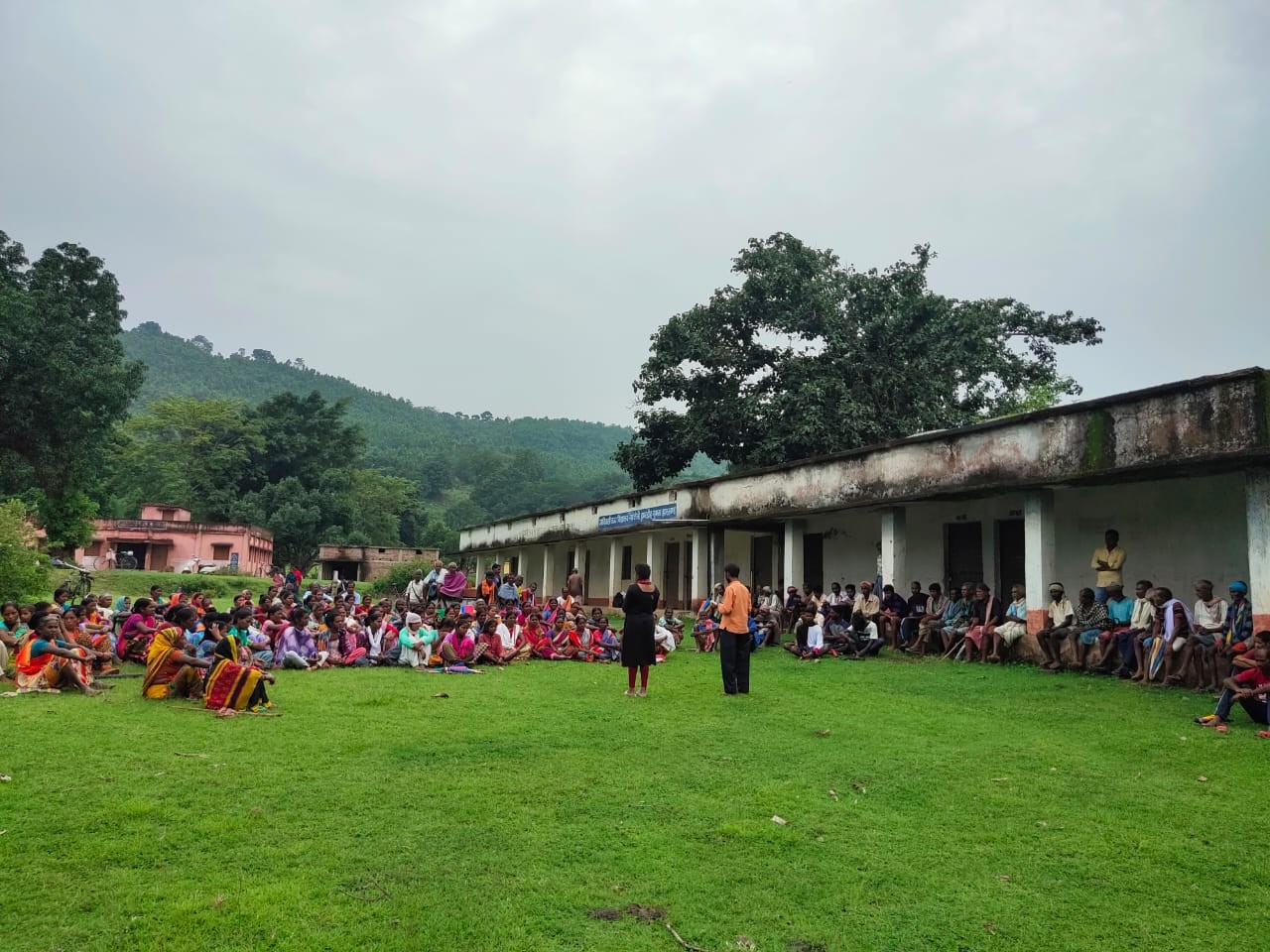
Photo: Ammu, during one her of her many interactions with the Oraon tribe
DO WE KNOW WHAT TO DO?
I don’t think I do. I am figuring out my way as I move forward. I left Jharkhand in April 2025, but I did not leave my conviction to work with and for them. I believe that we can grow together by learning from each other. I am simply looking for better ways to do what I can, to make a difference- a journey that is ongoing and incomplete
Now the question is this: What are you willing to do?
It need not be for Adivasi communities. It can be for any underserved section of society that needs it. It can be in the form of financial support, can be through volunteering or can be as small as genuinely and willingly getting to know such a group. Many people around us silently work towards causes like this. How aware are we?
CONCLUSION
As I said before, there’s nothing to say that hasn’t already been said- no statistics, no statements, no criticisms, no findings, or solutions that haven’t already been presented.
My motive for this piece was to share my journey, and the best-case scenario, present a community that I respect through my eyes. I hope that maybe this piece piqued the interest of someone reading this, created curiosity in someone to read up or enquire about such groups, or better yet, motivated some others to do something. Can we move beyond a development question/puzzle to change the status quo?
I would like to end with a quote that I have held close to my heart for the last few years-
“Go to the people. Live with them. Learn from them. Love them. Start with what they know. Build what they have. But with the best leaders, when the work is done, the task accomplished, the people will say ‘We have done this ourselves’.” - Lao Tzu.
About the Author