

We Ate Last. We Led First.
-Surbhi Mahatma, Executive, PRADAN
In the villages of Torpa, women learned early to eat last, to speak softly, and to carry the weight of families and systems on their bodies. This article is an account of what unfolded when listening replaced instruction, and when women occupied space to question, to gather, and to lead. Woven through moments of doubt, learning, and transformation, it reflects on how dignity, health, and agency are reclaimed, not through schemes alone, but through courage, collective voice, and care. In telling their story, the author also traces her own becoming.
Introduction
When I first arrived in Torpa block of Khunti district, Jharkhand in June 2017, I was inducted into PRADAN as a Development Apprentice (DA), at the very start of my career. I had completed my Master’s in Sociology from Banasthali Vidyapith, Rajasthan, and this role came through a campus placement. To be honest, I knew very little about PRADAN at that time, its philosophy, its depth of work, or what working in rural India truly meant.
What I did carry with me was curiosity and a growing interest in the development sector, shaped during my Master’s dissertation, where I had worked closely with urban slum communities. Those experiences had exposed me to structural poverty, gendered vulnerabilities, and everyday negotiations people make just to live with dignity. I had seen how lack of access to basic services, insecure livelihoods, and social hierarchies shaped health and wellbeing far more than individual choices. Those early experiences taught me to listen before acting, to question surface-level solutions, and to look at development through the lens of equity rather than charity. They also sparked a deeper interest in understanding how systems function and fail for the most underserved.
When I later entered rural development work, these learnings helped me recognize familiar patterns of exclusion, but also the immense strength within communities. As I engaged more deeply at the household level, it became evident that women were at the centre of this everyday resilience; managing food, care, water, and livelihoods, yet rarely recognised as decision-makers. This realization shaped my approach to see women not as beneficiaries, but as agents of change, and to understand that lasting transformation begins when people are enabled to question, participate, and lead; sparking a desire to work more deeply with underserved communities.
My First Few Months
While I was curious to chart this new course of my life, life threw me a curve ball. Within my first few months, I developed a severe UTI, something I hadn't experienced before. I could not trace it to a single cause. It could have been the long field days, irregular meals, dehydration, unfamiliar water sources, exhaustion, or simply the stress of relocating to a completely new environment. Perhaps it was a combination of all of these. The pain, discomfort, and repeated doctor visits shook me. It made me realise how deeply water, hygiene, sanitation, and nutrition are connected to a person’s dignity and daily wellbeing. As I struggled through those days, relying on clean water, proper hygiene, and timely care, I often wondered: “If this can happen to me with all my access and awareness, what must women in remote villages face every day?” That personal experience became a turning point. It made my work feel urgent, real, and deeply personal.
I was not working on Nutrition, Health, and Hygiene (NHH) as a focused theme when I first arrived in Torpa. Like most new Development Apprentices, my early engagement was broader which included understanding the community, livelihoods, institutions, and the everyday realities of rural life. Health and hygiene were present in the background, but they were not yet central to my work or identity as a development professional. The experience made me look towards NHH with even greater empathy and reinforced my commitment to work on the same.
Where We Began: A Landscape of Gaps and Possibilities
Torpa sits in the heart of Jharkhand, where rural life holds a beauty but demands immense resilience, especially from women. Amid forests and farms, 80% of households depend on rain-fed agriculture, and women carry the dual burden of sustaining families while navigating chronic nutrition and health challenges. On one hand, they are responsible for sustaining their families, managing food, water, childcare, farming support, and household work, often with very limited resources. On the other, they themselves face chronic nutrition and health challenges, shaped by food insecurity, heavy physical labour, early marriage, repeated pregnancies, anemia, and limited access to healthcare and sanitation.
Despite being central to household survival, women’s own health and nutrition are often the last priority. They eat last, rest least, and seek care only when illness becomes severe. This constant negotiation between responsibility and neglect places an invisible but heavy load on their bodies and minds. Understanding this lived reality was crucial, it revealed that improving nutrition was not just about food availability, but about addressing the structural and gendered pressures that define everyday life for women in Torpa.
I also decided to check if my observations match the data available at the time. I remember going through the National Family Health Survey (NFHS) data to understand the gravity of the situation.
The NFHS data: NFHS, Jharkhand data 2020-21 (https://www.nfhsiips.in/nfhsuser/index.php) suggests that:
- Around 67.8% anaemic, silently carrying the weight of their households
- 40% undernourished, often eating last and the least
- Children—bright-eyed but frail—half of them stunted or wasted
- And in many homes, women still blamed for giving birth to a girl child
But the numbers told only part of the story. Behind them lay a silent economic crisis. Poor nutrition, health, and WASH conditions in Torpa carried heavy financial consequences, even if these were never formally calculated. Families routinely lost workdays and wages due to recurrent illnesses like diarrhoea, fever, infections, or anaemia-related weakness, especially among women and children. A single episode of illness could cost a household ₹5,000–8,000 in a week, including medicines, travel to distant health facilities, and informal treatment. For families surviving on rain-fed agriculture and daily wages, this was devastating. Women also lost countless productive hours fetching water, managing sickness, or accompanying relatives for treatment, further shrinking income opportunities.
Over time, it became evident that poor WASH and nutrition were not just health issues, they were powerful drivers of hidden poverty, trapping families in cycles of medical debt, lost labour, and diminished wellbeing.
I remember feeling overwhelmed.
“How do we even begin?”
I asked myself, “How do we even begin?” The scale of the problems; anaemia, malnutrition, silence around hygiene, and deeply rooted gender norms felt overwhelming. But that question did not remain static for long. It slowly transformed into another: “What if we begin with the women themselves?”
Not as recipients of schemes, but as the starting point of the solution, listening to their lived realities, inviting them to shape the conversations on health and nutrition, and placing their voices at the centre of every intervention.
This shift did not happen in isolation. It emerged through many conversations with my team members in PRADAN who had walked similar paths before me, who reminded me to slow down, observe, and trust the process. Field reflections after long days, discussion during trainings, and informal conversations helped me connect the dots between what I was seeing and what could be done. I also found myself reflecting deeply during calls with family and friends, who offered emotional grounding and encouraged me to persist even when progress felt invisible. Alongside this, my academic grounding in sociology helped me step back and see the larger picture—how social norms, power relations, and systems shape individual behaviour.
Gradually, it became clear that change could not be imposed through information alone. It had to be nurtured through listening, collective reflection, and building confidence from within the community. Women were already at the centre of household nutrition, health, and care, constantly giving, rarely receiving, ensuring everyone else’s wellbeing while their own needs remained invisible. They mattered the least in decisions about food, rest, and healthcare. Realising this transformed my uncertainty into purpose. Instead of trying to “fix” problems, I began focusing on creating spaces where women could speak, learn, and lead. From there, the journey truly began.
Working with Women: At the core of change
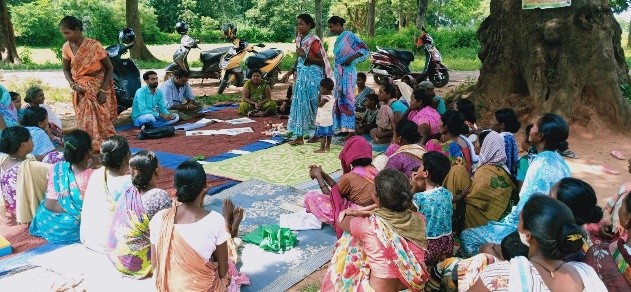
I started including the topics around NHH during SHG, Village Organisation (VO), and Producer Group (PG) meetings. I started to gently nudge these women to share their stories, and their struggles. These were not classroom-style training programs. They were designed as circles of conversation; sometimes sitting on the floor of an Anganwadi, sometimes under a tree, sometimes inside a woman’s home. The use of participatory tools, stories, games, and visual modules helped women speak without feeling judged. When discussions began with simple questions about food, daily routines, or children’s health, women slowly started connecting their lived experiences with health outcomes. As they realized that others shared similar struggles, hesitation turned into dialogue.
What struck me most in the early days were the stories of women that were rarely spoken aloud, yet carried every day. Women spoke of constant fatigue caused by anaemia, of eating last and the least, of bodies that never fully recovered between childbirths. Many shared how they were blamed for giving birth to daughters, facing neglect, emotional violence, and even abandonment. Young mothers spoke of sick children, frequent diarrhoea, low weight, delayed growth yet believed it was simply their fate. Adolescent girls hesitated to speak at first, ashamed to talk about menstruation, hygiene, or their own nutrition. These stories revealed not just poor health outcomes, but deeply entrenched gender norms, silence, and a lack of dignity.
Listening to them was painful, but it also clarified something for me: nutrition and health here were not just technical issues. They were lived experiences shaped by inequality in how food was distributed within households, by limited access to clean water, toilets, healthcare, and entitlements, and by the absence of women’s voices in decisions about their own bodies and their children’s wellbeing. These were not failures of awareness, but of power, recognition, and choice.
Photo: Women community members sharing their experiences around health and hygiene practices
Slowly, conversations deepened: from food habits to anemia, from childcare to gender roles, from sanitation practices to dignity. Adolescent girls, initially silent, began opening up in separate group spaces created specifically for them, where menstruation, hygiene, and bodily changes could be discussed without fear or shame.
Watching these shifts, I realised that what women had lacked was never intelligence or concern, but space, confidence, and legitimacy. Earlier, many believed that food shortages, weak services, and poor health were simply their fate. As conversations deepened, something fundamental began to shift. SHGs started questioning food practices, VOs discussed health entitlements, and women began asking why services were not reaching them and who was responsible. What once felt fixed slowly became negotiable.
As women gained legitimacy, through collective platforms and recognition by institutions, their voices began to carry weight. They moved from raising questions to influencing decisions, engaging service providers, and holding systems accountable. For me, as a development practitioner, this shift was equally transformative. My role evolved from facilitating discussions to stepping back and making space, from offering answers to listening more carefully. I learned that meaningful change does not come from speaking for communities, but from enabling women to claim their own authority. When women gain safe spaces and legitimacy, they do not simply learn to speak; they begin to lead, and in doing so, they also reshape how we practice development.
Shift that happened
This shift did not happen overnight; it emerged gradually through field realities, repeated reflection, and women’s voices shaping the work. Initially, nutrition interventions focused on what people ate and which services they accessed. However, during household visits, SHG meetings, and Behaviour Change Communication sessions, women consistently spoke about issues that went beyond food—fatigue, repeated illnesses, lack of privacy for defecation, unsafe water, menstrual discomfort, and having little say in household decisions. These narratives made it evident that nutrition was deeply tied not only to dignity but also to bodily autonomy in its most human sense: helping women move from silently enduring discomfort to recognising their bodies as worthy of care, attention, and respect within their homes and communities.
As discussions deepened, it became clear that awareness alone was insufficient. Women often knew what was right—balanced diets, hygiene practices, service entitlements but lacked the authority, resources, or confidence to act on that knowledge. This realization marked a turning point: the focus shifted from merely spreading information to enabling agency and decision-making. Micro-modules were designed to create space for dialogue on gender norms, intra-household food distribution, care burdens, and control over income, rather than only delivering technical messages.
Each Micro-module was divided into three parts. Perspective Building 1 focused on foundational themes such as dietary diversity, family planning, and prenatal and postnatal care. Perspective Building 2 addressed health and hygiene, with specific emphasis on adolescence, breastfeeding, and malnutrition while Perspective Building 3 engaged with systemic issues, including domestic violence, child marriage, malaria, tuberculosis, rights and entitlements, and community-based monitoring systems.
We also focussed on reframing the entire intervention around NHH:
- From nutrition as food → nutrition as right, wellbeing, and dignity
- From awareness → agency and decision-making
This reframing influenced the design of micro-modules, discussions on gender norms, and inclusion of Water Sanitation and Hygiene (WASH) as a non-negotiable component.
The Turning Point: Building a Cadre of Women Change-Makers
From the experiences gathered, we began developing process protocols to scale up and expand our health and nutrition interventions to achieve sustainable change. The PRIDE (Partnerships for Rural Integrated Development and Empowerment) project, in collaboration with the IKEA Foundation, was aligned with this vision. Initiated in 2016, the project aimed to promote improved practices in health, nutrition, and hygiene, and to improve access to quality public health services through the collective action of SHGs.
The intervention focused on five blocks of Jharkhand including Torpa, Gumla, Shikaripara, and Poriyahat, among others. After I joined, the work was intensified across 44 villages as core intervention areas, while the remaining villages were engaged through a light-touch approach. This design created a living laboratory of change. In the intensive villages, livelihood discussions were no longer separate from health conversations, women began linking income with food diversity, workload with anaemia, and water access with illness. Nutrition dialogues naturally expanded into WASH practices, adolescent health, and service access, while livelihood platforms such as SHGs became vehicles for health action, sanitation savings, and collective negotiation with public systems. At the same time, light-touch villages began creating their own demand by observing visible changes in neighbouring areas; improved practices, confident women leaders, and better utilisation of services. This combination of depth and spread allowed us not only to demonstrate what integrated, convergent work could look like, but also to seed aspiration, replication, and scale, turning nutrition, health, livelihoods, and WASH into parts of a single, interconnected ecosystem rather than isolated interventions.
The most significant shift began with the identification and nurturing of Community Volunteers as Change Vectors (CVs). Through a series of community interactions and training sessions, one volunteer was identified from each hamlet. These women demonstrated curiosity, empathy, and a willingness to learn and take leadership at the community level. While the role is voluntary and does not follow a formal job description, the CVs take on key responsibilities such as community mobilisation, facilitating trainings and discussions, conducting regular household interactions, and helping families understand the importance of health, hygiene, and related practices. Working at the hamlet level, they collectively became the backbone of the programme.
We groomed the CVs through a structured capacity-building process, starting with soft skills like communication, facilitation, confidence-building, and leadership before moving into technical themes related to nutrition, health, and hygiene. The CVs then took these learnings back to their SHGs, where they facilitated discussions, raised difficult questions. Women started asking, “If nutrition is so important, why do we eat last in the family?” Others questioned why girls were expected to compromise on food while boys were served first. Some asked, “Why is a woman blamed if a child is undernourished, but no one asks who controls money in the household?” These questions forced us to confront nutrition as an issue of power and gender, not just diet and slowly shifted household and community practices.
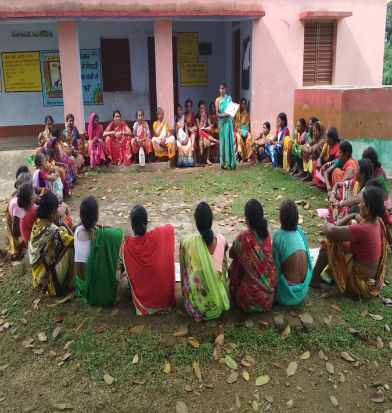
Photo: Community Volunteer with the women community members
Over time, the growth of the CVs became visible and measurable. Sixty-six CVs reached the Green grade—the highest ranking of change vectors facilitating micro-modules independently and confidently within their communities. Another twenty-five CVs were categorised as Yellow, requiring light guidance and occasional handholding, but steadily building their facilitation skills and confidence.
A few CVs struggled more deeply, particularly with acceptance within their communities. For many of them, change did not begin in public meetings but inside their own homes. There were murmurs from spouses questioning why they were “wasting time talking about food and toilets,” dismissive comments from mothers-in-law who saw their learning as unnecessary, and neighbours who mocked them for speaking about menstruation, sanitation, or women’s health. The voices were familiar: “Log bolte the—yeh sab shehar ki baatein hain, gaon mein kaun aisa karta hai?” (People used to say—these are city things, who does this in villages?)
“Pehle mere ghar mein hi koi meri baat nahi maanta tha, toh gaon ko kaise samjhaati?” (When no one in my own home listened to me, how could I convince the village?)
In the early days, many were jeered at, called “over-smart,” accused of bringing shame by talking about women’s bodies, or told that illness and hunger were simply destiny. Instead of withdrawing, these women chose a slower, quieter path. They began by changing practices within their own families by introducing iron-rich foods, using iron utensils, ensuring handwashing, insisting on toilet use, and seeking timely healthcare.
Slowly, as neighbours noticed visible changes, that is, healthier children, fewer illnesses, greater confidence and curiosity began to replace ridicule. Another familiar reflection echoed across hamlets: “Jab mere bachche kam bimaar padne lage, tab log poochhne lage, tum kya alag kar rahi ho?” (When my children started falling sick less often, people began asking, what are you doing differently?)
Their journeys were slow and often marked by resistance and self-doubt. Supporting them taught me the true meaning of patience and sustained handholding. Their progress reminded me that transformation is not always visible or fast, but it is real and it always begins with courage.
Many CVs later told me that facilitating meetings made them “feel seen” for the first time. When the CVs, mostly women from the community, were trained to facilitate micro-modules on nutrition, health, and hygiene, they initially faced challenges like hesitation to speak in public, skepticism from other community members, or self-doubt about their knowledge and capacity. As they started leading discussions, mentoring peers, and sharing knowledge, many of them expressed that facilitating meetings made them “feel seen” for the first time, meaning they experienced recognition, respect, and a sense of agency within their community.
Moments That Stayed With Me
Women blamed for girl children
During Micro Module 1—a session on understanding sex and gender through the rice and pulse game, many women began sharing deeply personal stories of violence, blame, and discrimination for giving birth to girl children. Listening to these experiences was painful and unsettling.
Yet, these moments reaffirmed for me why conversations on gender cannot remain separate from nutrition and health work. A woman’s nutritional status, her access to care, and her overall wellbeing are deeply shaped by how she is valued within her family and community. Without addressing gender norms and power dynamics, improvements in nutrition and health can never be fully realised.
The adolescent girls who taught me courage
After Micro Module 2—the module on dietary diversity, I met a group of adolescent girls who decided to consciously improve their diets by including tri-colour foods in their daily meals. What began as a simple discussion on nutrition soon translated into visible confidence. As their understanding grew, so did their voice.
Encouraged by these early shifts, we formed dedicated adolescent groups where girls could come together in safe spaces to openly discuss their struggles around food, hygiene, menstruation, body changes, and self-worth. Through regular interactions, we worked on building their awareness on nutrition and hygiene, while also addressing the silences and stigma that surrounded these topics.
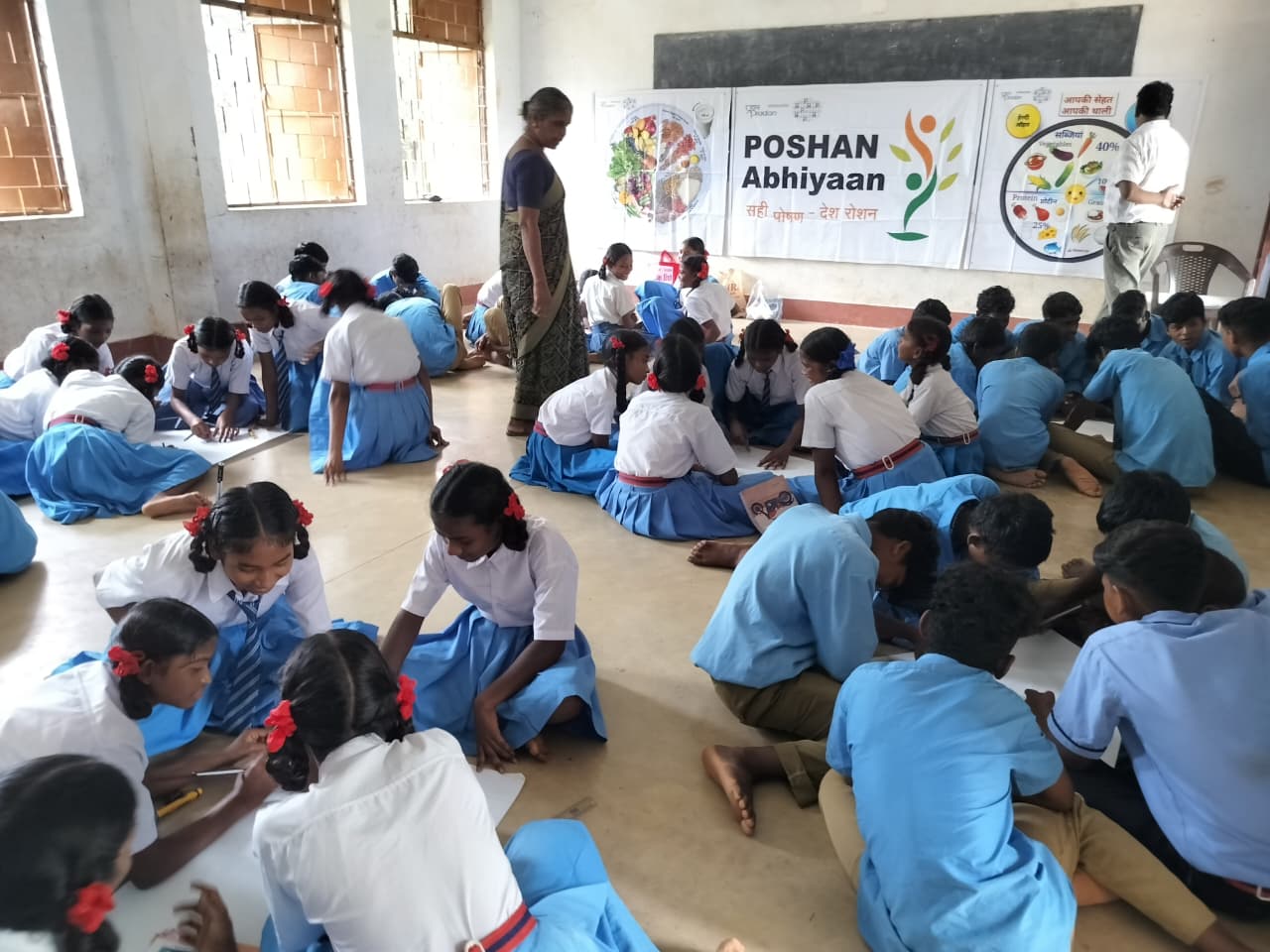
Photo School celebrating Poshan Abhiyaan in a school
Over time, this collective confidence led to a powerful moment: the girls confronted their school authorities about not receiving sanitary pads and finally their voices made it and started receiving sanitary pads. That day, I witnessed leadership emerge directly from awareness. Over time, health meetings started to happen at school as well.
Sushma Bodra, a student of standard 6th from Marcha High School in Torpa says, “My menstrual cycle has not started yet, but after attending the health meeting at school, when I went home, I told my elder sister about what I learnt in school. So now my elder sister uses new clothes in place of old clothes, and she also no longer dries the used-and-washed cloth in hiding. She directly dries it under the sun.”
Prafullit Kundulana, a student of standard 7th from March RC school in Torpa says, “I used pads on a monthly basis. I used to reuse the same pads the next month if it was not very dirty. But since I attended the health meeting in school, I learnt about hygiene and my health. I don’t reuse old pads now.”
These experiences have reaffirmed my belief that when adolescents are informed, listened to, and supported, they do not just adopt healthier practices, they begin to challenge systems and demand dignity.
The iron kadhai wave
In 2018, after receiving training on dietary diversity and the health benefits of cooking in iron utensils, which naturally enrich food with iron and help prevent anaemia, nearly 2,500 women chose to buy iron kadhais. The demand was so overwhelming that local markets actually ran out of stock.
One of the examples of this growing demand was Jyoti Topno. She lived in a hamlet with three SHGs but was not a member of any of them. When Ratni Topno, a Community Volunteer, began conducting health meetings in the hamlet, she invited Jyoti, then pregnant, to attend. The first session on “Food Security: Our Farm, Our Food” did not resonate much with her, but the second, on “Care During Pregnancy,” did. Through these discussions, Jyoti learnt about the importance of antenatal check-ups and began attending the Village Health Sanitation and Nutrition Day (VHSND) at the Anganwadi Centre.
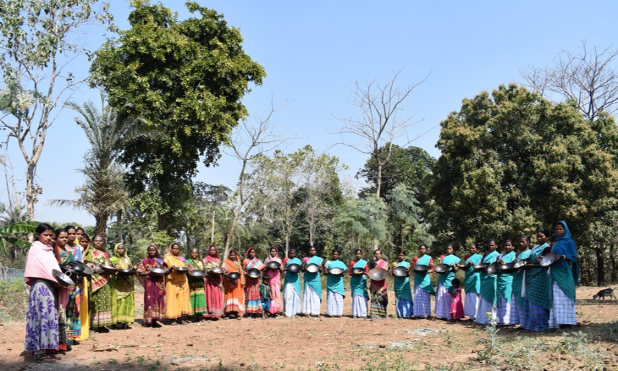
Photo: Women with iron kadhais
When SHG members decided to purchase iron kadhais, they did not insist that Jyoti buy one since she was not part of any group. Yet, inspired by the conversations around her, she bought one on her own and started using it daily. She also began including more green leafy vegetables, pulses, and seasonal foods in her meals, often combining them with vitamin-C-rich items like lemon or tomatoes. Alongside this, improved hygiene practices, fewer infections, and regular Ante-natal care (ANC) follow-ups with iron–folic acid supplementation strengthened her recovery.
Jyoti later had a normal delivery at Torpa Hospital. Six months after childbirth, her haemoglobin level was recorded at 12.5 g/dl—an outcome that surprised the Auxiliary Nurse and Midwife (ANM) who conducted the test. For Jyoti, the reasons were clear: small but consistent changes in what she ate, how she cooked, how she cared for her body, and how regularly she accessed health services.
When Nutrition Led Us to Water, Sanitation & Dignity
While these successes made us happy, the journey also came with important learnings. Over time, one insight became unmistakably clear, not through theory, but through repeated field realities: nutrition cannot improve unless water and sanitation improve. Despite regular nutrition counselling and improved food practices, many women and children continued to fall sick. Anaemia persisted, children struggled to gain weight, and diarrhoeal episodes remained frequent. Closer observation revealed a pattern; households with better diets but unsafe drinking water, open defecation, or poor hygiene were unable to sustain nutrition gains.
These everyday contradictions forced us to confront a hard truth: working in silos and treating nutrition, hygiene, and sanitation as separate themes was limiting our impact. This understanding led to a transformative partnership with Water.org in 2019, grounded in the belief that sustainable nutrition outcomes are possible only when hygiene and sanitation are addressed as integral parts of the same ecosystem. The partnership decided to work on:
1. Community Ownership of WASH
As SHGs and federations deepened their engagement with Nutrition, Health, and Hygiene, women began negotiating with Panchayats and line departments on issues that directly affected their daily lives—toilet construction and Swachh Bharat Mission incentives, repair and regular functioning of handpumps, access to safe drinking water sources, improvement of Anganwadi Centre infrastructure, regular supply of take-home ration (THR) and eggs, organisation of VHSNDs, and timely health services such as ANC, immunisation, and growth monitoring.
This confidence did not emerge overnight. It grew as women began to connect their lived struggles—recurrent illness, anaemia, child undernutrition, loss of wages, and gaps in public services. Through micro-modules, WASH discussions, exposure visits, and collective reflection in SHG and VO meetings, women slowly moved from saying “yeh humara kaam hai” (this is our work) to asserting “yeh hamara haq hai.” (this is our right). Community data, scorecards, and shared experiences strengthened their belief that engaging with the system was not confrontation, but accountability.
However, while women were ready to act, a persistent barrier remained—money. Families knew that toilets needed repair or that safe drinking water required filters, but lacked affordable finance to do so. With the introduction of low-interest WASH loans through SHGs, VOs, and banks, this gap finally closed. Households began investing in sanitation and water with pride—constructing toilets, upgrading bathrooms, repairing defunct handpumps, and purchasing water filters. For the first time, sanitation shifted from being seen as charity or obligation to being owned as a household investment in dignity.
2. Behaviour Change at the Village Level
Our Behaviour Change Communication meetings gradually evolved into safe spaces where people could speak openly about open defecation, unsafe drinking water, and menstrual hygiene. Women led these conversations through SHGs and VOs, and over time adolescents, children, and even men joined—especially during Gram Sabha discussions and village-level sanitation drives.
Each hamlet-level meeting engaged 20–30 participants, while village sessions often saw 40–60 people. These were not one-time interactions. Meetings were held monthly through SHGs, quarterly at the village level, and intensified during key moments such as sanitation campaigns or water source repairs. Behaviour change demanded repetition, patience, and presence.
The early months were difficult. Women lowered their voices, laughed nervously, or avoided eye contact. Men dismissed sanitation as “women’s issues.” Adolescents stayed silent. As a facilitator, I often struggled, searching for the right language, the right metaphors, wondering whether I was pushing too hard.
What carried us through was trust. Games, stories, visuals, and local idioms replaced lectures. CVs shared their own journeys, turning taboo into familiarity. Slowly, silence gave way to curiosity, curiosity to dialogue, and dialogue to action. Menstrual hygiene was discussed without embarrassment. Families began treating drinking water. Open defecation was no longer defended as “lifestyle” but questioned as a health risk.
As women became more confident, their engagement with government systems deepened naturally. They no longer waited passively for schemes to arrive. They demanded Swachh Bharat incentives, monitored VHSNDs, followed up on take-home ration (THR) and egg supply, and held Panchayats accountable for broken handpumps and dysfunctional Anganwadi Centres. Government programmes that once felt distant began to feel reachable, because women now knew their rights—and how to claim them.
Looking back, I realise that behaviour did not change because people were instructed. It changed because they were enabled through space, finance, institutional linkages, and the courage to speak for themselves.
What This Journey Has Meant to Me
There were days of frustration, when meetings didn’t work, when systems delayed, when community resistance was high. Resistance came in many forms: women hesitant to speak in SHG meetings, families reluctant to adopt new hygiene practices, adolescents uncomfortable discussing menstrual health, or men dismissing sanitation initiatives as unnecessary. Dealing with this resistance required patience, empathy, and consistent engagement. Support from my team, friends, and family helped me navigate these challenges.
We began by listening actively to concerns rather than imposing solutions, creating safe spaces where people could share doubts and fears. Through repeated Behaviour Change Communication sessions, small demonstrations, and relatable stories, we slowly built awareness and trust. Involving respected community members and change-makers like trained CVs helped influence others, as villagers often followed peers rather than outsiders. Celebrating small wins, like the first household adopting a toilet or the first adolescent openly discussing hygiene, created social proof that motivated others.
There were days that made all the struggles worth the effort.
A child gaining weight after completing treatment at a Malnutrition Treatment Centre (MTC), where severely malnourished children receive intensive care for 15 days to a month, with mothers staying alongside them as their child’s growth and feeding practices are closely monitored;
A mother telling me, “Didi, ab hum samajh gaye” (Now we have understood);
A Panchayat member calling for support, not because they must, but because they care;
Women confidently monitoring health services;
And young boys talking about hygiene without shame.
These moments still give me goosebumps. This work has taught me resilience, empathy, and patience.It has shown me the power of collective action. And it has strengthened my belief that nutrition is not just food—it is dignity, rights, gender equality, and wellbeing.
The Road Ahead (2023–2030)
Torpa has built strong roots.
The next chapter must focus on:
- Deepening nutrition-sensitive agriculture, focussing on accessibility, availability, knowledge, practice, behaviour, stability
- Scaling nutri-gardens
- Strengthening supply-demand linkages in health services
- Making AWCs and Health Wellness Centres (HWCs) fully functional
- Expanding WASH credit models
- Ensuring water access under SBM-II
- Empowering adolescents as leaders
- Making Panchayats nutrition champions
The vision is simple: Every household is healthy. Every woman is empowered. Every child is thriving.
Closing Reflection
This journey has never been just “work” for me. It has been a process of becoming—becoming more grounded, more compassionate, and more committed to rural transformation.
Through countless conversations with women, I came to understand a simple but profound truth: empowering a woman does not merely change her life, it sets in motion a ripple of systemic change. As women grow in confidence, they emerge as leaders, role models, and catalysts within their families and communities. Their voices begin to shape everyday practices around nutrition, sanitation, and health, inspire adolescents to adopt better hygiene behaviours, and gradually challenge entrenched gender norms. When women participate actively in decision-making, institutions respond differently. SHGs become stronger, Village Organisations more accountable, Panchayats more inclusive, and service delivery systems more effective.
This is the true multiplier effect of women’s empowerment: personal confidence leads to community influence, which in turn drives systemic transformation. Somewhere along this journey, I realised that strengthening a woman strengthens the entire system.
Torpa did not change only because of our interventions. It changed because its people were ready to dream bigger and allowed us to dream with them. And that, for me, remains the heart of this story.
About the Author
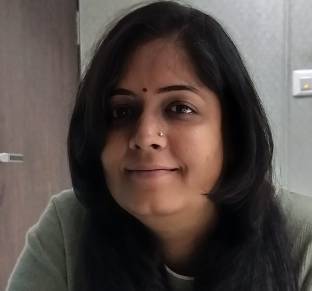
Over the years, Surbhi has worked closely with women’s collectives, Panchayati Raj Institutions, and frontline systems to design and implement integrated interventions addressing malnutrition, anaemia, sanitation, and access to public services. Her professional interests centre on women’s agency, nutrition security, WASH, and institution building, guided by a belief in people-centred development rooted in dignity, empathy, and collective action.