
Skip to content

Pradan

Increase font size Decrease font size Default font size
Home arrow Careers arrow Meet our people
Jibdas Sahu
Jibdas Sahu, a Palli Siksha Bhawana graduate, works with PRADAN to empower women and help the rural poor aspire to better lives.

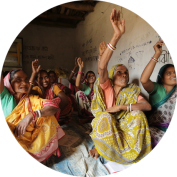
Jidas Sahu“Initially I was against starting Self Help Groups (SHGs) with women,” Jibdas Sahu, team leader of PRADAN’s Dumka Team, said.  SHGs are informal associations of 10 to 20 poor women from a single village who meet weekly, pool their small savings and make out small loans to members to meet small contingencies and once the group matures leverage larger loans from banks to fulfill their members needs. “I thought the village women were overworked already – let the men do something.  But after working with these women to set up the SHGs I realized how empowering it was for them. These women had never dreamed of attending meetings with government officials and bank managers or even of stating their opinion openly, especially not in front of a large group of people, and through the SHG they were doing all of those things. The men in the village started respecting them more.  The SHG for the women was not work, it was a pleasure, a way to be empowered, and it opened the world outside the village up to them.”

SHGs are a crucial component of the work of PRADAN, a voluntary organization focused on promoting and strengthening livelihoods for the rural poor. Apart from setting up SHGs, PRADAN also develops and introduces locally suitable sectoral activities to expand economic opportunities in the hands of poor families, imparts livelihood related skills, mobilizes finances from government agencies and banks, and nurtures local institutions to ensure that poor people sustain these livelihood gains. PRADAN is based on the belief that mass poverty can only be eradicated if dedicated professionals work at the grassroots level.

Jibdas Sahu, who holds a BSc(Ag Hons) and MSc in Agricultural Extension from Palli Siksha Bhawan, joined PRADAN in April 1995 out of a desire to work directly for communities and use his knowledge for the good of people. Despite his initial reservation about SHGs, he is now a firm supporter of them and one of his SHGs is shown as a model for bank managers and government officials in the Dumka district when they want to understand how an SHG works. His younger PRADAN colleague, Anita Sharma, notes: “Jibdas is good at mobilizing the community and inspiring the women to take control of their actions. At one point, the SHG had organized to hire a building and the night before, the owner of the building refused to let them use it and verbally abused one of the women. At this point, we could have used our status as PRADAN to intimidate them, but instead, Jibdas called up seven SHGs in that area and at 8 at night conducted a meeting inspiring them to stand up for their rights and in the end the women won the dispute with the building owner, which was really uplifting for them and showed them that they could independently confront injustice.”

Jibdas has now been with PRADAN for almost twelve years. During that time, he has been involved in a watershed project that has benefited 450 families and has been used as a model watershed for all of Jharkand, introduced new agricultural practices and crops to villages, worked with all stages of tasar production, and formed SHGs.  When asked why he has stayed with PRADAN for so long, he replies: “Firstly, because I was lucky enough to be born as a human being and as such want to do something which is meaningful to me such as helping people aspire to better lives. Secondly, PRADAN’s culture is wonderful – PRADANites are honest and respectful and innovative. Thirdly, PRADAN is very decentralized – teams are given a lot of freedom to do as they think best and recruitment is done by all team leaders, not just a chosen few. Guiding new Development Apprentices is also done by all experienced professionals. As such it isn’t top-down management but instead everyone in PRADAN is involved in its development.”

"If I were asked to leave PRADAN today, I would leave with a sense of pride for the work I have done."
Jibdas Sahu


He adds: “If I were asked to leave PRADAN today, I would leave with a sense of pride for the work I have done. For instance, through my involvement villagers in Dumka now use the paddy threshers, which saves them a huge amount of work and time and now use pump sets in the field, which has helped them with their crops. They have started new, more successful crops through our involvement and now can produce more than one crop a year. When I came to Dumka ten years ago, the villagers did not have basic amenities or sufficient food for the whole year, so they had to work as wage laborers. Now in the villages we have worked with, the situation has improved considerably and this makes me very happy.”

When asked if he has any advice for someone thinking of joining PRADAN, he replies: “If you want to help the community, you have a huge opportunity to do so in PRADAN.” He smiles and adds, “The sky is the limit with PRADAN.”

Read other profiles